

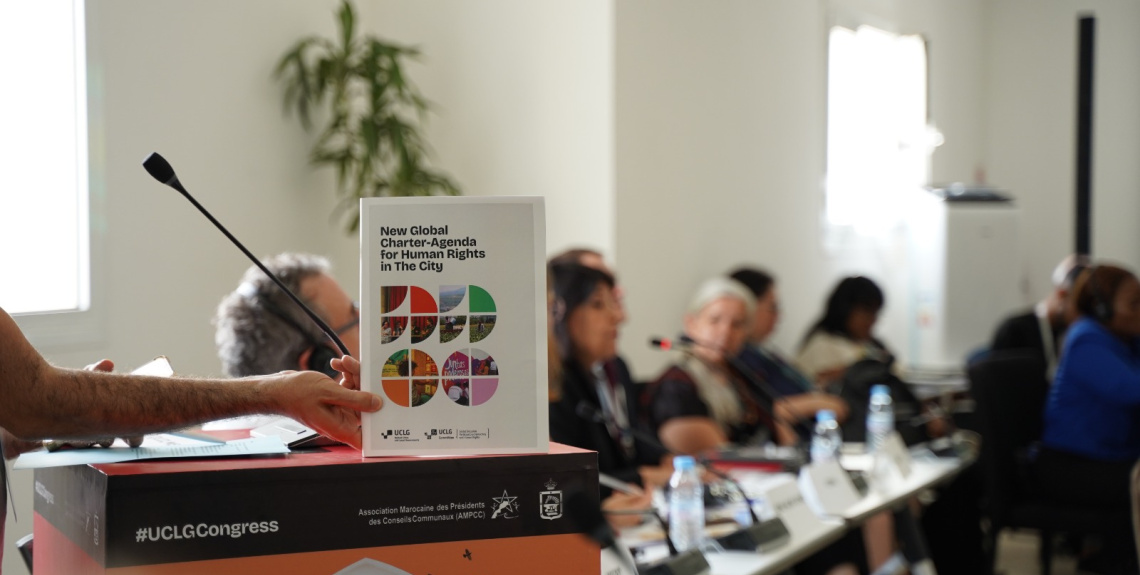
Highlights from the World Summit of Local and Regional Leaders — Tangier, 22–25 June 2026
The UCLG World Congress and World Summit of Local and Regional Leaders gathered mayors, governors, local and regional governments associations and practitioners from across the world in Tangier from 22 to 25 June 2026, under the thematic framework of a New Generation of Universal Local Public Services.
For the Committee on Social Inclusion, Participatory Democracy and Human Rights (CISDPDH), the Congress constituted a defining moment: the launch and adoption of the New Global Charter-Agenda for Human Rights in the City. The Congress also provided the platform for a strong program of sessions on the right to a life free from violence, housing justice and everyday essentials, and the consolidation of the Local Social Covenant as the political horizon for local and regional governments beyond 2030.
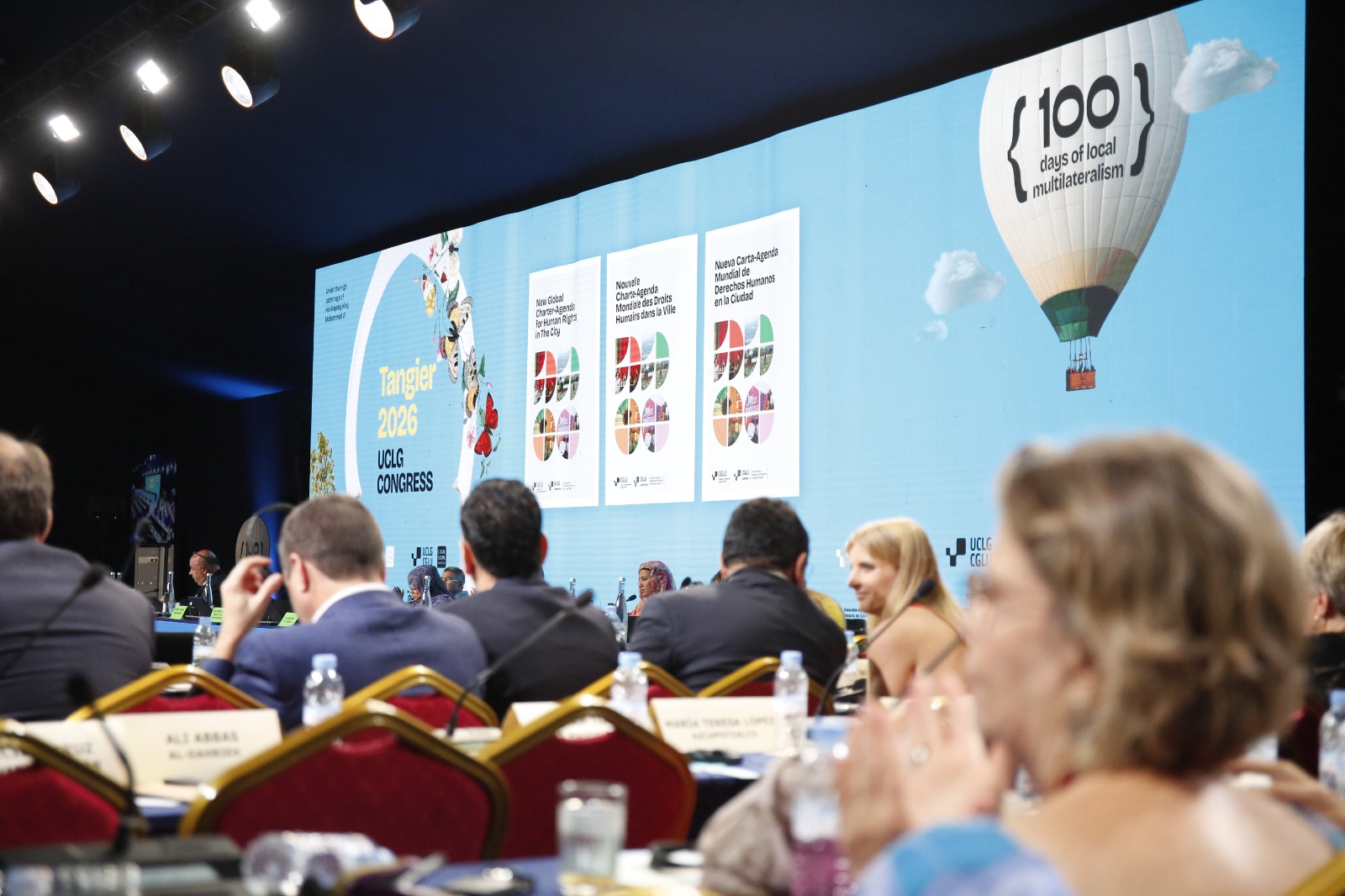
The New Global Charter-Agenda for Human Rights in the City: human rights at the centre of local governance
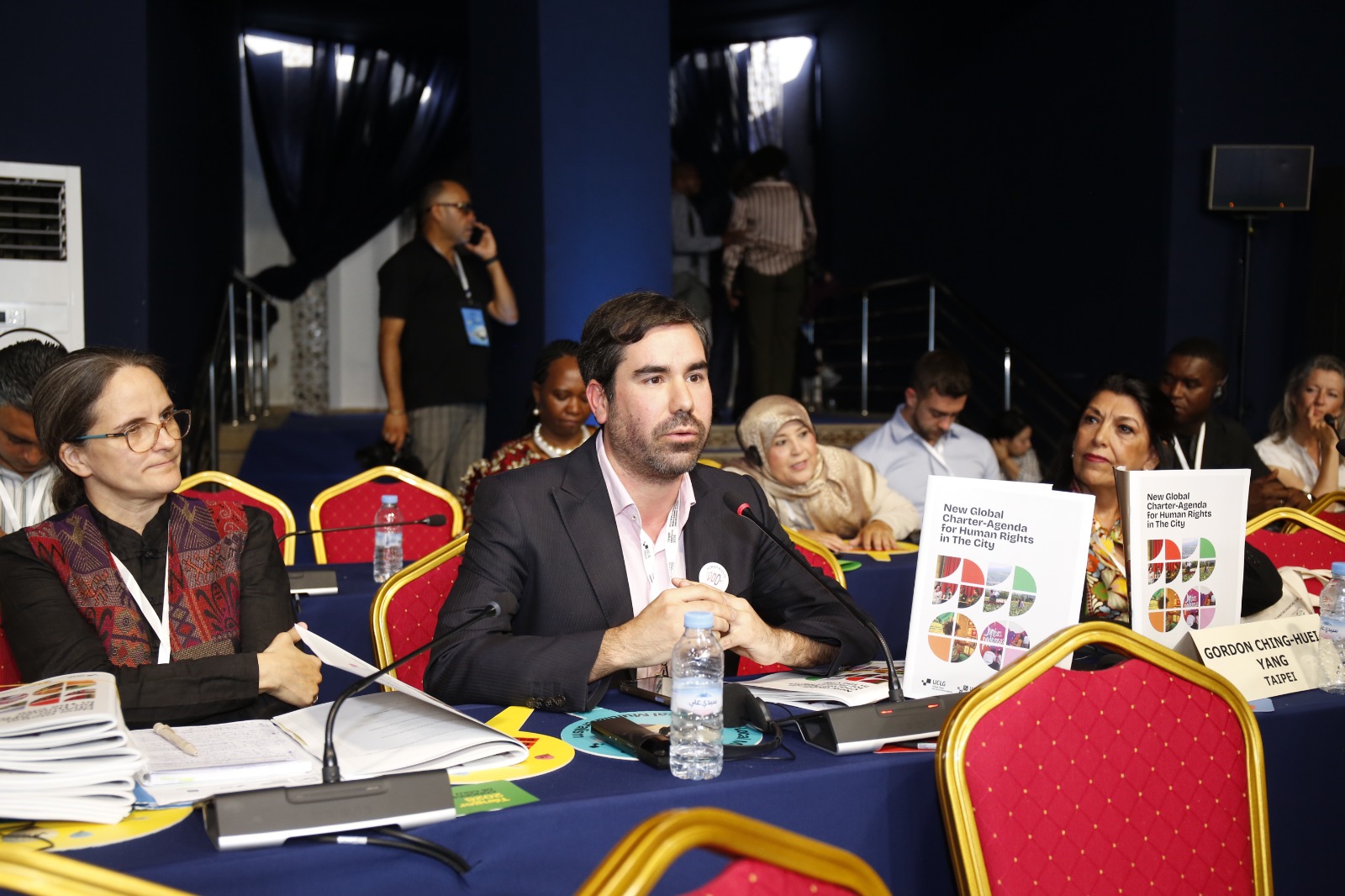
The Congress saw the launch and adoption of the New Global Charter-Agenda for Human Rights in the City, an updated global reference framework designed to guide local and regional governments in advancing human rights from the local level. The New Charter-Agenda reaffirms the role of local and regional governments as duty-bearers and recognises 37 human rights in the city, each accompanied by concrete pathways for delivery.
The Charter-Agenda offers an integrated vision of human rights in the city. Alongside fundamental rights already recognised internationally, it incorporates new human rights, spanning essential services and social, economic, cultural, environmental and democratic rights — with particular attention to groups that continue to face discrimination and barriers in exercising their rights. Crucially, it is not only a declaration of principles but a political and practical tool, providing principles, commitments and concrete recommendations for local action.
The document is the result of several years of collective work, bringing together cities from every continent, international networks, civil society organisations, universities and experts — a diversity of actors that is its greatest strength.
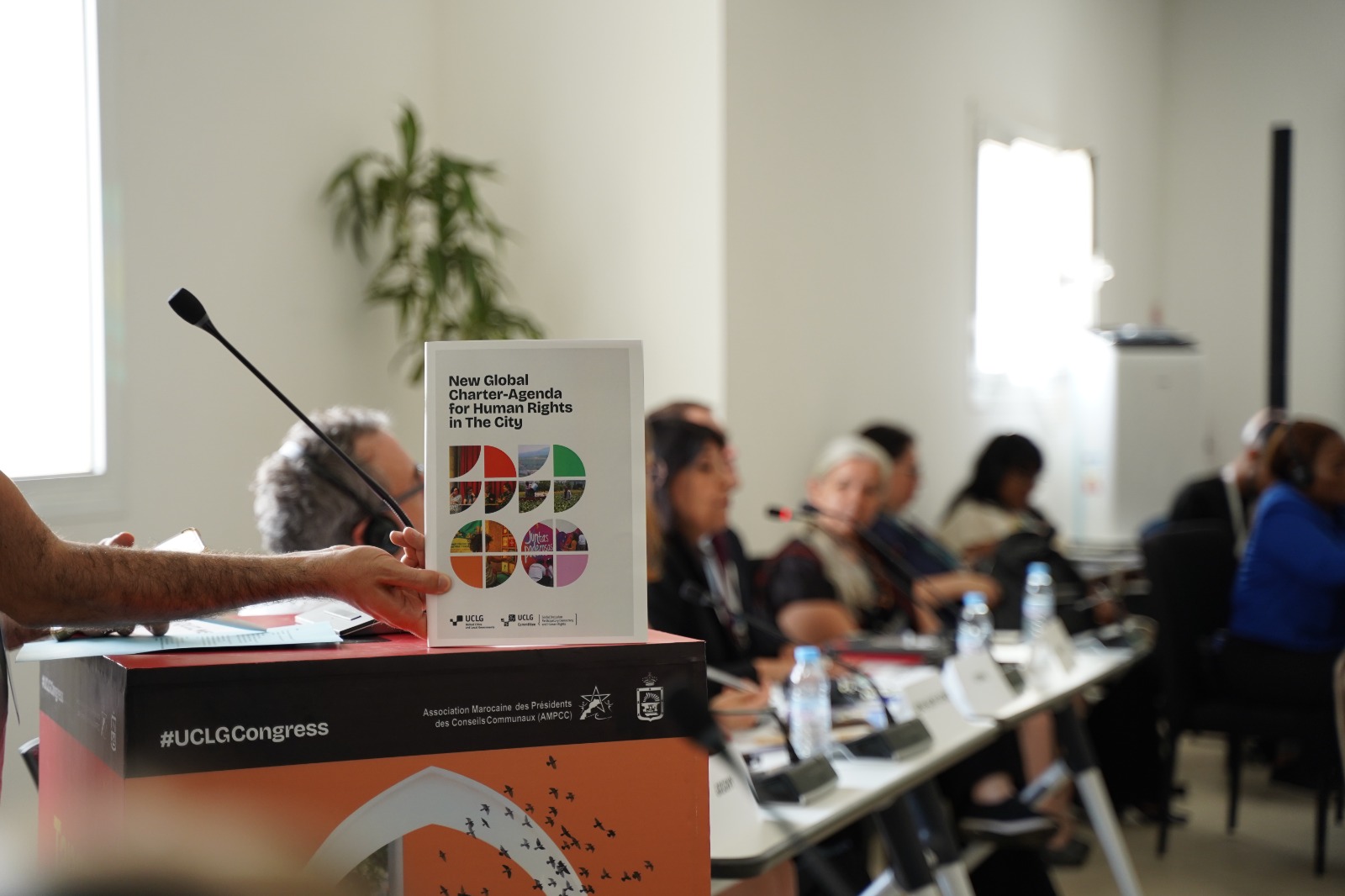
A three-day arc, from launch to adoption
The Charter-Agenda was first presented during the dialogue "The New Global Charter-Agenda for Human Rights in the City: Strengthening the Human Rights Cities Movement" on Tuesday 23 June, organised by UCLG–CISDPDH in collaboration with the Office of the United Nations High Commissioner for Human Rights (OHCHR) and the Global Platform for the Right to the City (GPR2C).
Opening the session, Philippe Rio, Mayor of Grigny, set the tone:
Human rights only take on meaning when they become a reality in everyday life — in our neighbourhoods, our schools, our public services, in access to housing, health, culture, democratic participation and a healthy environment.
The session took stock of four years of the campaign "10, 100, 1000 Human Rights Cities and Territories by 2030", launched by the Committee in 2022 during the UCLG Congress in Daejeon. Since then, more than 100 local and regional governments have joined the movement to protect, promote and implement human rights at the local level. The dialogue also welcomed new members into the "10, 100, 1000 Human Rights Cities and Territories by 2030" campaign, reflecting the growing diversity and geographic reach of the movement. For this 4th wave of the campaign, we are excited to share that new cities have joined our global movement. These new commitments further strengthen the campaign's global reach and reinforce the growing movement of local and regional governments advancing human rights from the local level. The discussion also reinforced the Guidance Framework for Creating a Human Rights City, published in 2025 and co-developed with OHCHR, as a practical and political tool to embed human rights across local governance, public policies and service delivery.
The discussion brought together local leaders, practitioners and human rights advocates from different regions, including:
- Adrià Duarte, Coordinator of our Commission, who opened the session;
- Philippe Rio, Mayor of Grigny;
- Javier López Casarín, Mayor of Álvaro Obregón and President of AALMAC;
- Mayra Mendoza, Mayor of Quilmes;
- Abdul-Hamid Karimeh, Mayor of Tripoli;
- Oriane Filhol, Vice-President of the Department of Seine-Saint-Denis;
- Shams Asadi, Human Rights Commissioner of Vienna;
- Rocío Lombera, Coordinator for International Affairs of Mexico City;
- Rachel Marie-Cécile K. Woedina Ywassa, President of REFELA Togo;
- Rosa Boladeras, Councillor for International Relations of Terrassa; and
- Nelson Saule Junior, from the Global Platform for the Right to the City;
- Sol Tischik, Chief of Staff of Lomas de Zamora;
- Hans Sakkers, City of Utrecht;
- Joshua Cooper, Director of the Hawaiʻi Institute for Human Rights.
Together, they reflected on the achievements of the Human Rights Cities movement and discussed priorities beyond Tangier, including the implementation of the New Global Charter-Agenda, the expansion of the "10, 100, 1000 Human Rights Cities and Territories by 2030" campaign, and the conditions needed to strengthen human rights localization worldwide — fostering dialogue on the enabling conditions for effective human rights localisation, including financing, institutional autonomy, multilevel governance and international solidarity.
On Wednesday 24 June, the UCLG World Council brought a discussion on the Intergenerational Council for Everyday Essentials exploring housing, care, food, health, water, culture and democratic participation as the foundations of dignity, equality and local democracy. Speaking there, Philippe Rio underlined that the "everyday essentials" are the concrete translation of human rights, and tied them directly to the Charter-Agenda and to UCLG's Local Social Covenant — stressing territorial and intergenerational solidarity, the full participation of young people in defining public policies, and the role of cities as laboratories of democratic innovation.
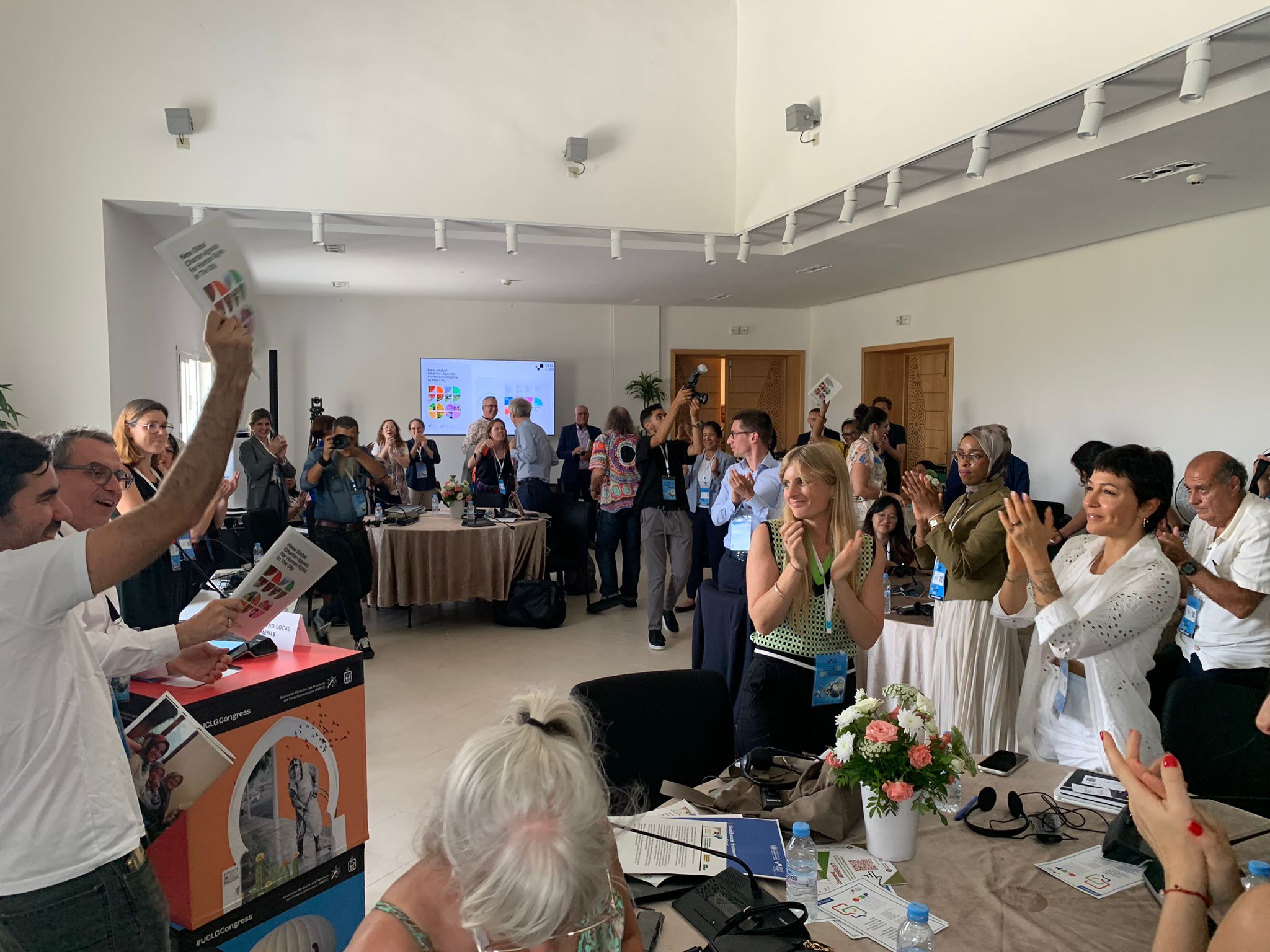
The Charter-Agenda was then formally presented for adoption at the World Council on Thursday 25 June, framing a clear roadmap for the future of human rights in local governance.
To ground the discussion, Marta Villanueva, Councillor of Barcelona, outlined what the Charter-Agenda truly represents. Villanueva reminded delegates that adoption marks a beginning rather than an end:
The adoption of this Charter is not a point of arrival, but a point of departure — a renewed commitment to continue building cities that place human dignity, equality and social justice at the centre of their policies.
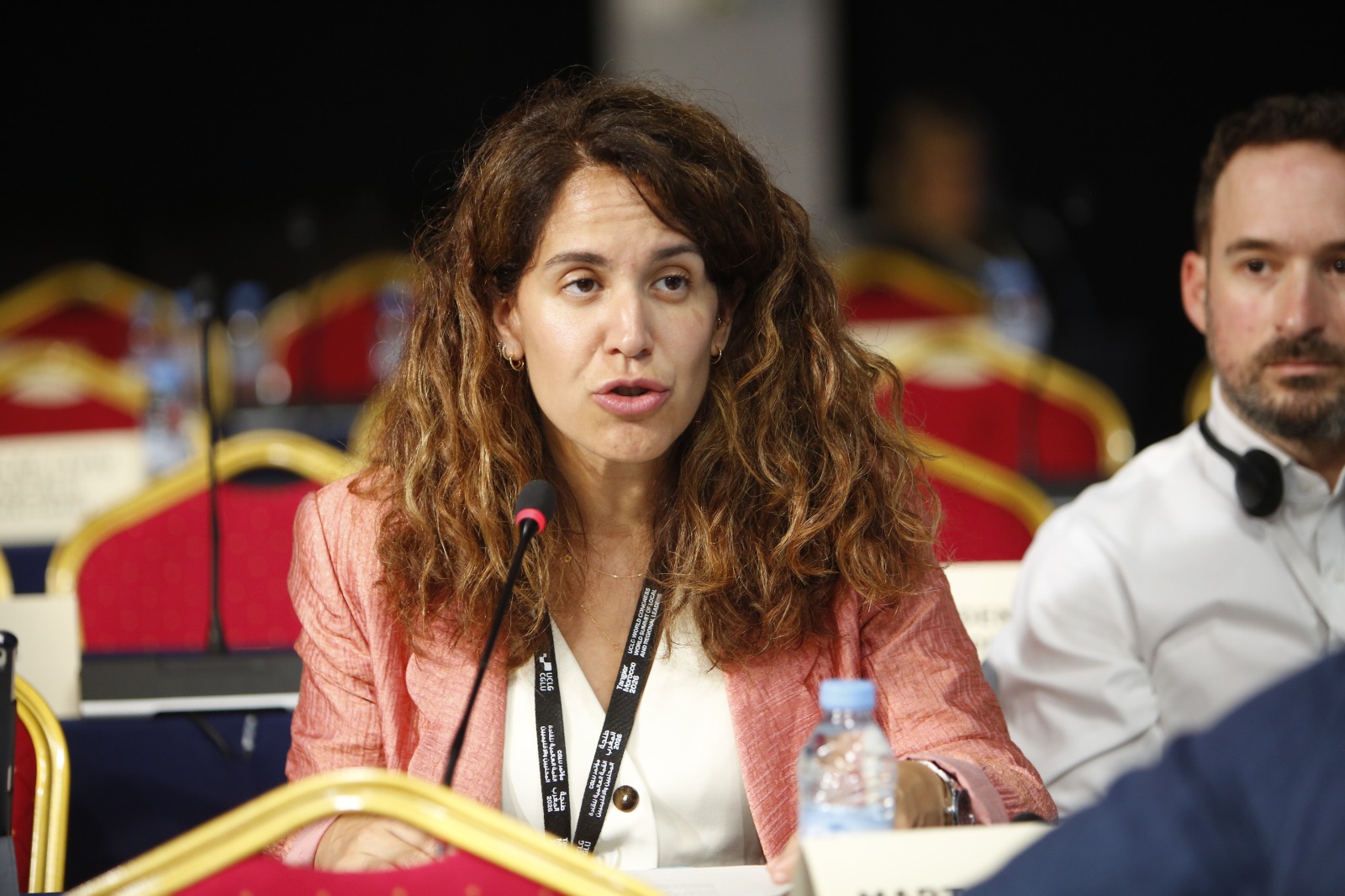
Addressing the call for urgency, Lorena Zarate of the Global Platform for the Right to the City, framed the timely necessity of this framework. She emphasized that unprecedented global crises, rising systemic exclusions, and democratic deficits mean local governments need an immediate, institutionalized framework right now to safeguard vulnerable populations and guarantee urban rights.
Finally, shifting the focus to implementation, Shams Asadi, Human Rights Commissioner and head of the Human Rights Office of the City of Vienna, detailed the practical, collaborative methodology behind the initiative. She highlighted that the Charter-Agenda is being built from the ground up through transnational city networks, participatory local policies, and concrete toolkits designed to embed rights directly into decision-making, local action plans, and public service metrics.
Women's right to a life free from violence
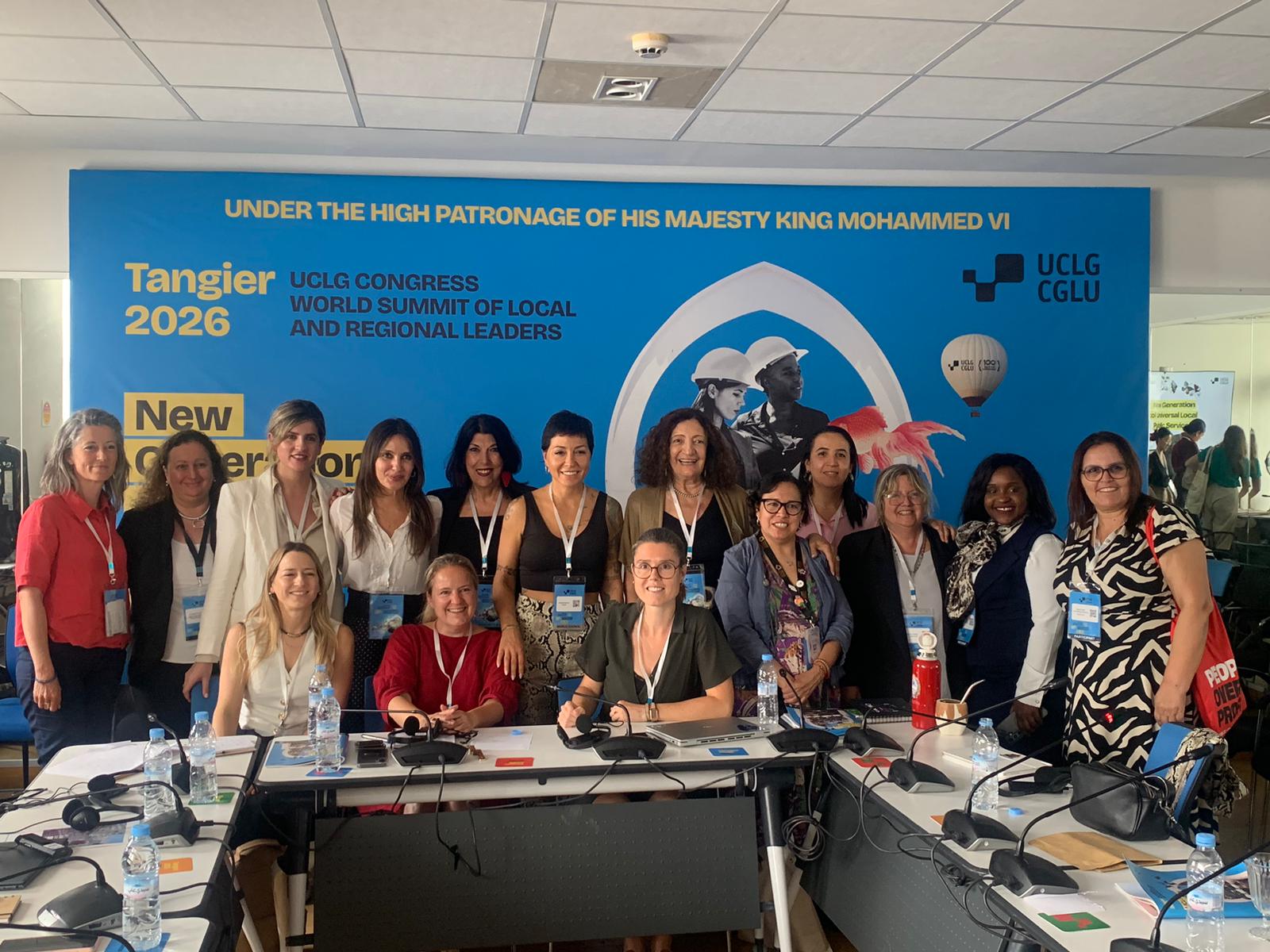
On the afternoon of Wednesday 24 June (14:30–16:00), the dialogue "Women's Rights to a Life Free from Violence" convened local and regional governments committed to ending gender-based and domestic violence — a direct expression of the rights the Charter-Agenda seeks to localise. The session was led by the Observatory on Violence Against Women (OIVF) of the Seine-Saint-Denis Departmental Council, with UCLG–CISDPDH as co-organiser. It recalled a stark global reality: one in three women has experienced physical and/or sexual violence by an intimate partner in her lifetime.
The dialogue built on the project "Toward Territories that Protect Women Victims of Violence," launched by Seine-Saint-Denis in 2021, co-financed by the French Development Agency and supported by CISDPDH, and on the International Charter "Toward Territories that Protect Women Victims of Violence," signed during a capitalisation seminar in Bobigny in 2024. In Tangier, the session reviewed progress since that seminar, promoted the Charter to encourage new territories to join, and showcased the network's capacity-building tools — a MOOC, thematic fact sheets and newsletters. The session closed with an invitation to new local and regional governments to sign the International Charter.
The Congress advances housing justice, everyday essentials and care-based approaches for a rights-based vision of local action
Housing took centre stage at the UCLG World Council on Wednesday 24 June with the session "Building the Housing Justice Academy." The Academy was launched as a platform for political leadership, peer learning and collective action on housing as a human right and public common good, responding to affordability pressures, displacement and climate vulnerabilities — and advancing housing justice as a key pillar of the Local Social Covenant.
Discussions on housing justice were complemented by the Intergenerational Council for Everyday Essentials, which framed housing, care, food, health and culture as foundations of dignity, equality and local democracy. The discussion explored how local and regional governments are strengthening access to essential services through rights-based and people-centered approaches, contributing to a renewed social contract rooted in solidarity, wellbeing and local action.
Rights-based public services and territorial inclusion
The Congress also hosted the meeting of the Forum of Peripheral Local Authorities (FALP), which highlighted the specific challenges and opportunities faced by peripheral, border and geographically remote territories. Discussions emphasised the importance of ensuring that social inclusion, access to services, democratic participation and human rights are fully integrated into territorial development strategies, reaffirming that no territory should be left behind in the implementation of the Local Social Covenant and the human rights agenda.
Moreover, the Congress reaffirmed the importance of quality public services and social dialogue as pillars of democratic local governance. During the Multilateral Coalition Session “Strengthening alliances with local public service workers”, in collaboration with Public Services International (PSI), participants highlighted the role of workers, trade unions and local governments in building inclusive and resilient public service systems. In this regard, the World Council adopted the Global Framework Agreement on Social Dialogue and Cooperation, reinforcing the commitment of local and regional governments to universal public services, decent work, social justice and strengthened social dialogue at all levels.
Care emerged as a cross-cutting theme throughout the Congress — from the Care Corner open throughout three days to dedicated sessions on integrated care systems — reflecting our commitment to placing care and feminist policies at the heart of local governance. The Congress also provided an opportunity to present the latest stage of the GOLD VII report on “Economies of Equality and Care”, which explores how local and regional governments can advance care-centred systems through public services, social dialogue, multilevel governance, decent work, financing and democratic participation. Building on the understanding of care as a need, a value and a right, the publication reinforces the role of local and regional governments in placing wellbeing, equality and the sustainability of life at the centre of public action.
The Congress outcomes
Beyond the adoption of the New Global Charter-Agenda for Human Rights in the City and the Local Social Covenant, the Congress marked the beginning of a new political cycle for UCLG through the renewal of its governing bodies.
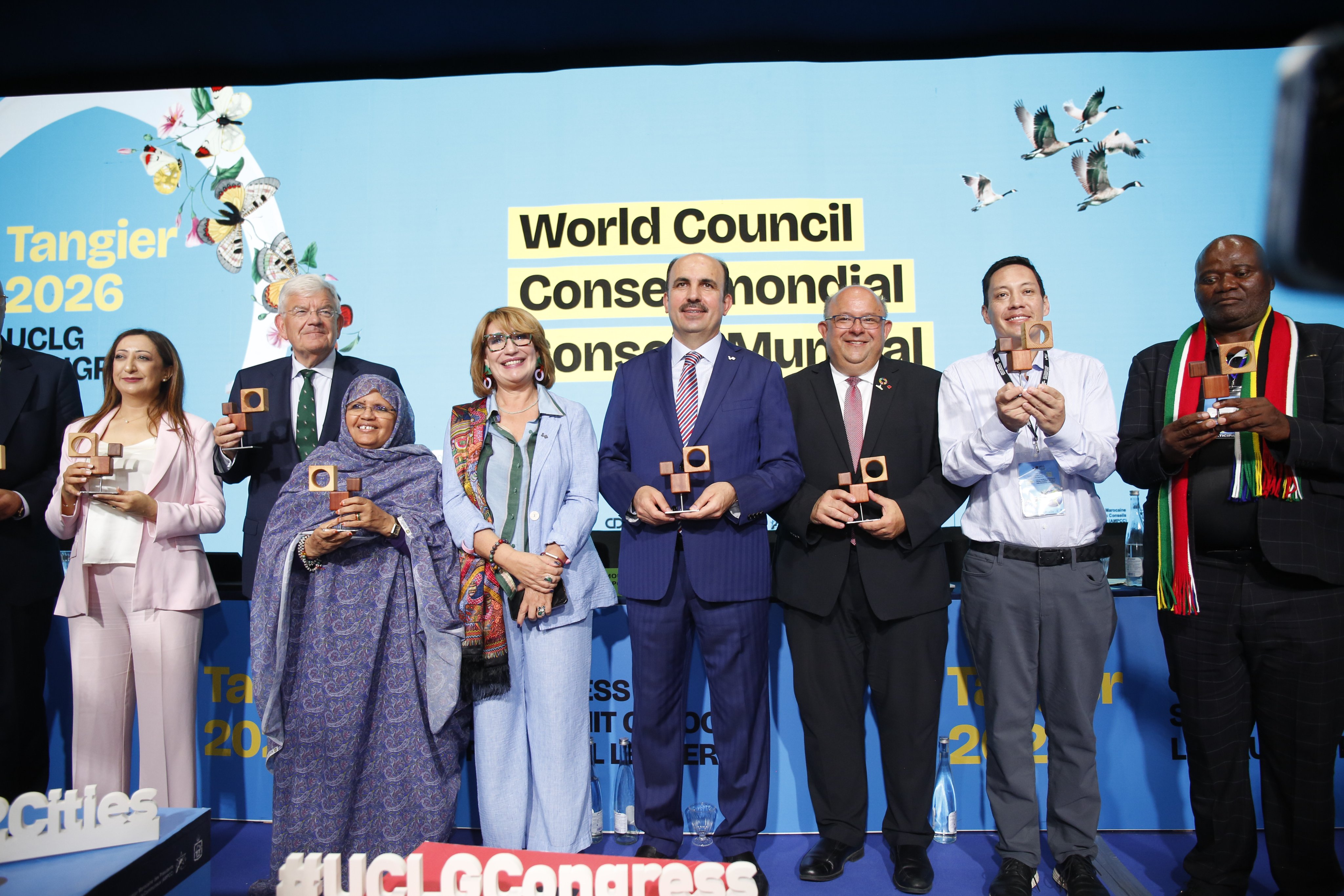
The UCLG World Council elected Uğur Ibrahim Altay, Mayor of Konya, as President of the organisation for the 2026–2030 term, alongside a renewed Presidency, Executive Bureau and governing bodies representing local and regional governments from all world regions.
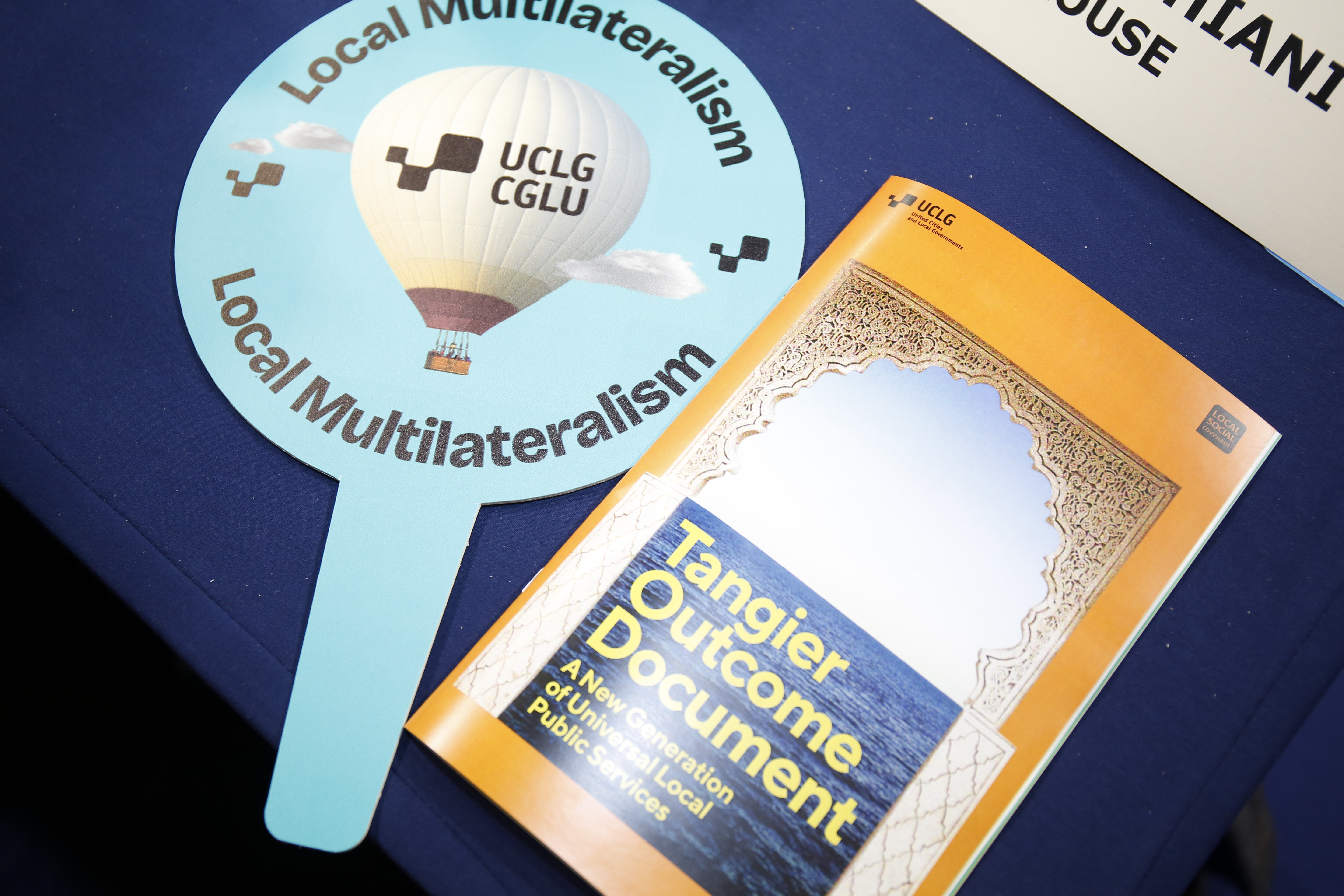
The Tangier Outcome Document — A New Generation of Universal Local Public Services — sets out the Tangier Commitment, a renewed Local Social Covenant, around the following priorities:
-
Reaffirm the role of local and regional governments as proximity governments and guarantors of democracy, peace and human rights.
-
Advance a new generation of universal, accessible and non-discriminatory local public services as the everyday infrastructure of rights, grounded in equality, care and sustainability.
-
Promote housing justice and redefine "the New Essentials" — from water, sanitation and energy to care, digital rights and the democratic governance of artificial intelligence — as universal rights and public goods.
-
Advance climate action as a matter of justice, placing the communities least responsible for and most affected by the crisis at the centre of climate governance.
-
Build a democratic local finance that connects mandates with means, securing the fiscal space, fair revenue systems and institutional recognition that territories need to deliver.
-
Accelerate gender equality through feminist municipalism, guaranteeing lives free from violence and the full and sustained leadership of women and girls in public life.
-
Support the localisation of human rights through the Charter-Agenda for Human Rights in the City.
-
Expand international solidarity and decentralised cooperation among local and regional governments, reclaiming city diplomacy as an expression of local multilateralism.
-
Place youth participation and intergenerational justice at the centre of public decision-making.
Looking ahead
For the Committee and the broader Human Rights Cities movement, Tangier marks the beginning of a new phase. The priorities ahead include implementing the New Global Charter-Agenda for Human Rights in the City and the Guidance Framework for Creating a Human Rights City, expanding the "10, 100, 1000 Human Rights Cities and Territories by 2030" campaign, strengthening the network of “Toward Territories That Protect Women Victims of Violence”, and advancing housing justice, care, democratic participation and everyday essentials as central components of human rights-based local governance worldwide.