

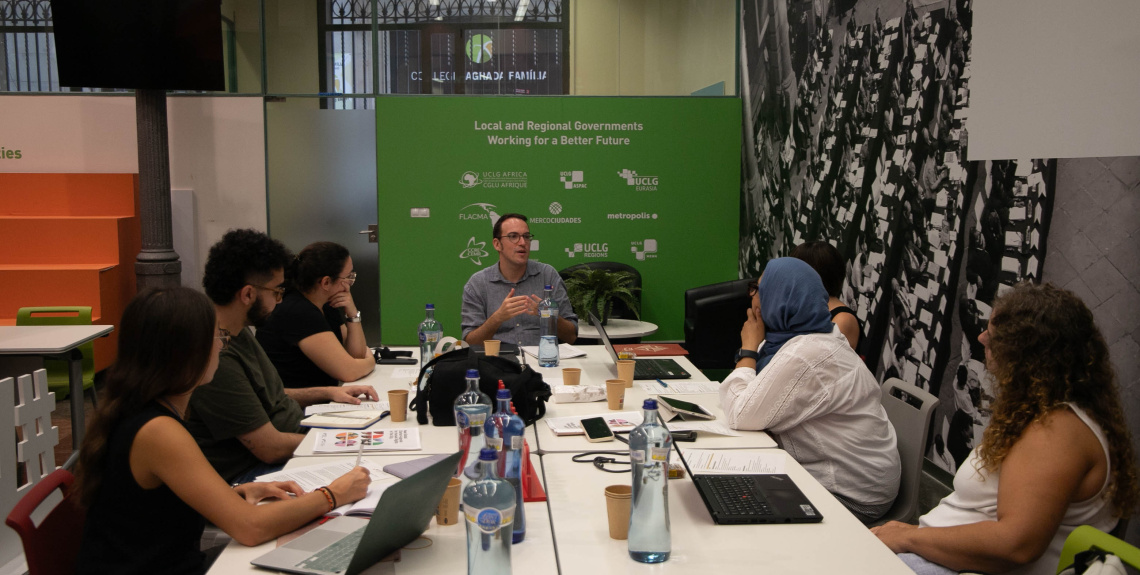
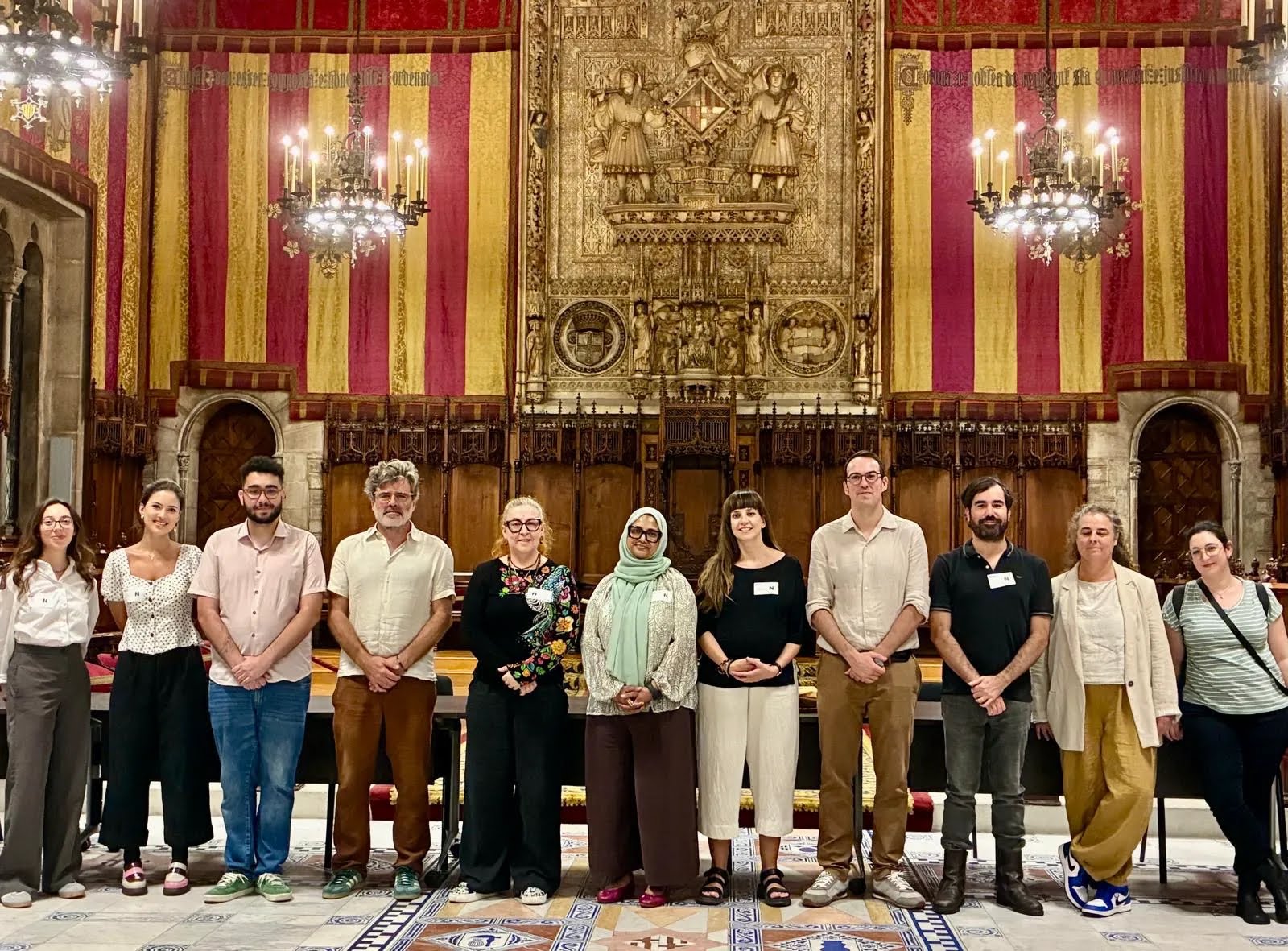
United Cities and Local Governments (UCLG), through its Committee on Social Inclusion, Participatory Democracy and Human Rights (CISDPDH) and its Culture Committee, joined Barcelona City Council in organising a three-day Peer Learning Experience in Barcelona with Manchester, Mexico City and São Paulo. Held under the theme “Cultural Institutions as Guarantors of Human Rights in Contexts of Democratic Backsliding,” the exchange explored how local governments and cultural institutions can contribute to protecting human rights, strengthening social inclusion and creating meaningful spaces for democratic participation.
The peer learning brought together local government representatives and cultural actors to examine how cities can respond to growing pressures on civic space, freedom of expression and social cohesion. Through institutional exchanges, site visits and a collective workshop, participants explored how cultural spaces can support rights-based local governance, inclusion and participation, while identifying mechanisms that can strengthen the resilience of local institutions and communities.
The experience will contribute to the development of a Survival Toolkit for Cultural Institutions and Local Governments, as well as further UCLG work on cultural autonomy and human rights in challenging democratic contexts.
Connecting culture with human rights-based local governance
The exchange began with Barcelona's experience of connecting its human rights and cultural policies. David Llistar, Director of Human Rights, Global Justice and International Cooperation at Barcelona City Council, and Jaume Muñoz Jofre, Head of the Department of Human Rights and Non-discrimination of Barcelona, highlighted the importance of strengthening links between policy areas that are often managed separately at municipal level.
The experience of Barcelona's Office for Non-Discrimination (OND) provided a concrete example of how human rights principles can be translated into local services and institutional mechanisms. Through legal advice, psychosocial support, mediation and collaboration with civil society organisations, the OND works to address discrimination and strengthen equality and non-discrimination in the city.
Its experience also highlighted the importance of evidence and community-based networks in local human rights governance. Information collected through cases and civil society referrals can help municipalities identify patterns of discrimination and inform broader policies addressing racism, exclusion and inequality.
Social inclusion: making cultural and civic spaces accessible to all
Throughout the exchange, participants examined how inequalities can affect people's ability to access and participate in cultural and civic life.
At the Centre de Cultura Contemporània de Barcelona (CCCB), participants discussed the importance of connecting cultural institutions to their surrounding communities, particularly in diverse neighbourhoods. The CCCB's work with schools, young people and local communities illustrated how cultural spaces can create opportunities for people who do not traditionally participate in institutional cultural life.
The discussion highlighted that inclusion goes beyond access. Creating genuinely inclusive spaces also requires considering whose experiences are represented, who participates in decision-making and whether institutions reflect the diversity of the communities they serve.
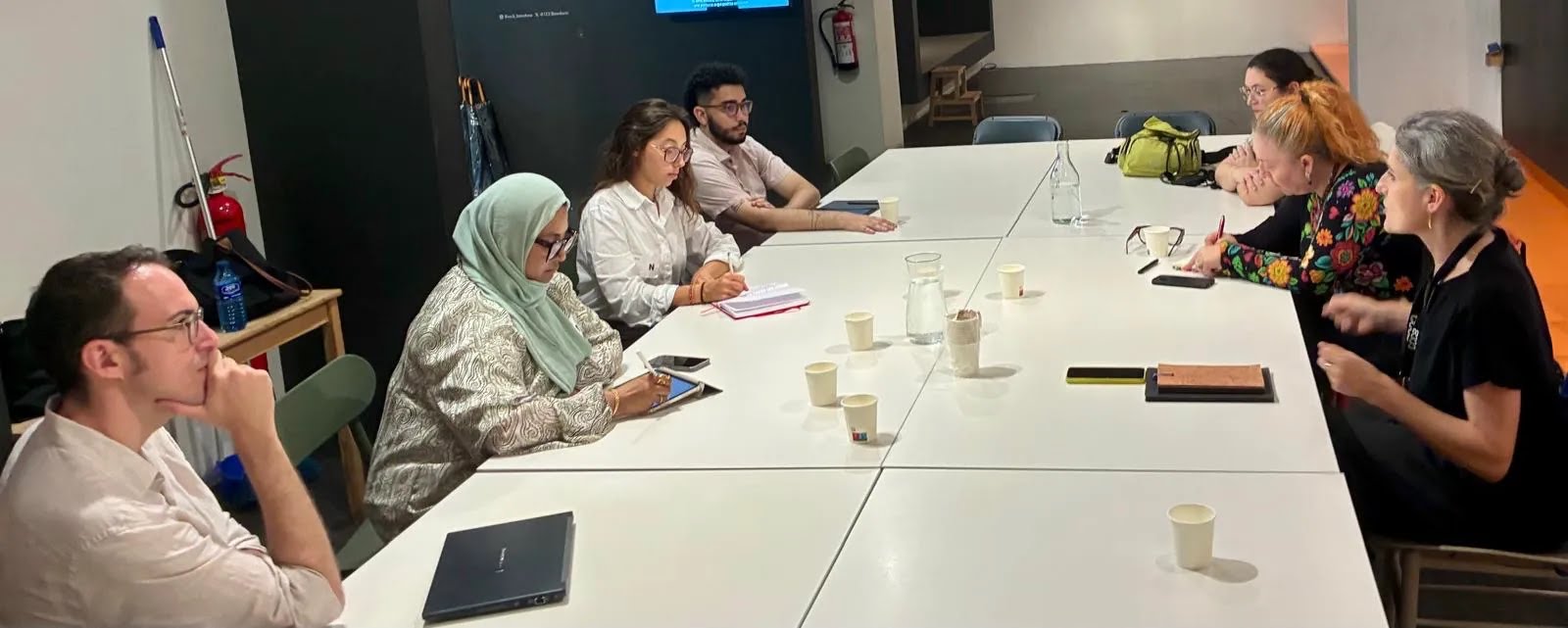
This question was also raised during the visit to the Vallcarca i els Penitents Library, where participants explored the role of libraries as public spaces for learning, social connection and access to information. The discussion also drew attention to structural barriers affecting cultural participation, including inequalities in resources, access and representation.
Participation, co-creation and community engagement
The peer cities brought complementary experiences of using culture as a means of strengthening participation and community engagement.
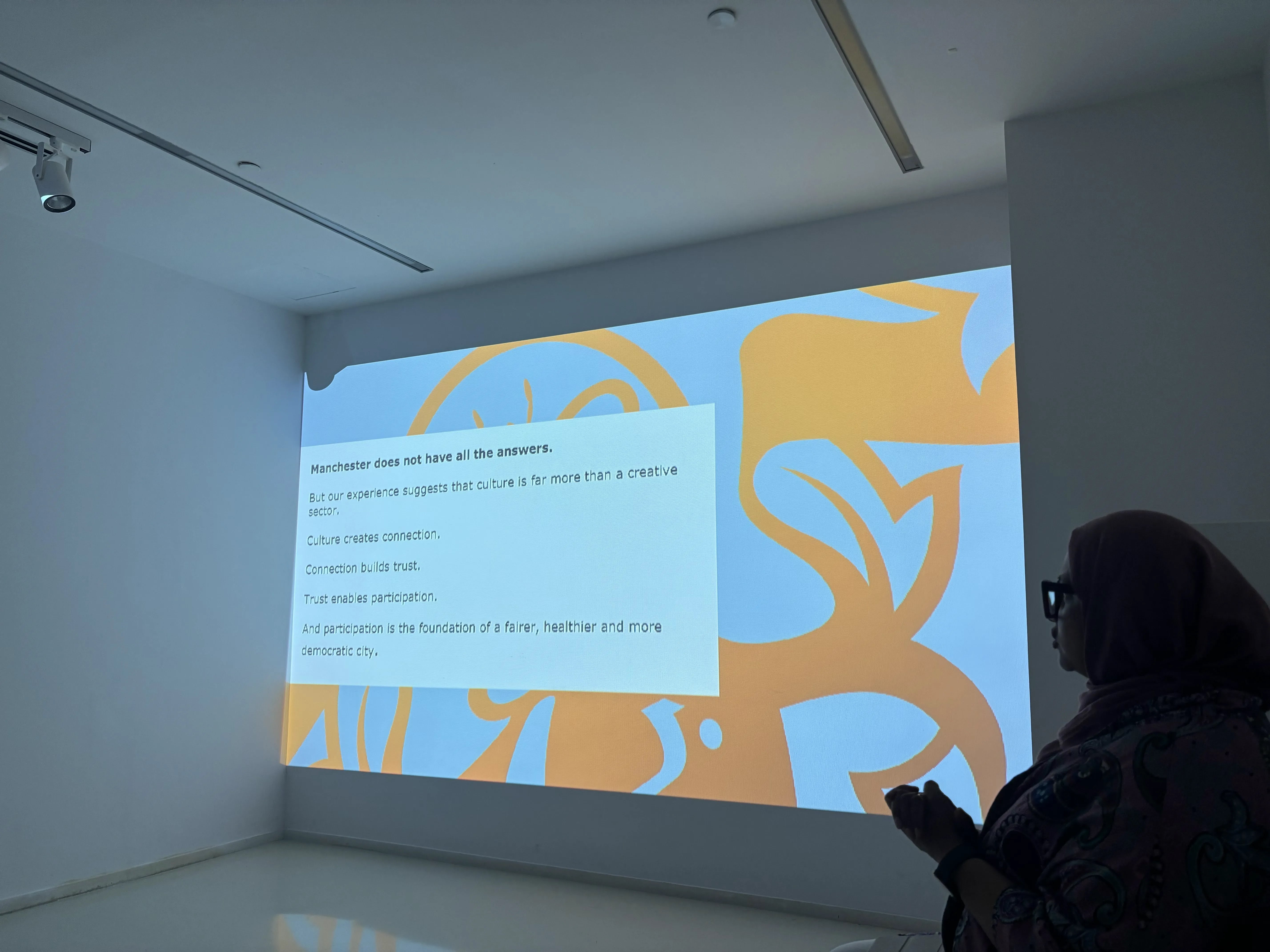
From Manchester, Safina Islam, Integrated Head of Inclusion and Engagement at Manchester City Council, presented an approach centred on community engagement, co-design and co-production. The city's work with different communities, including through cultural programmes and community archives, illustrates how participation can contribute to belonging and enable residents to shape the places where they live.
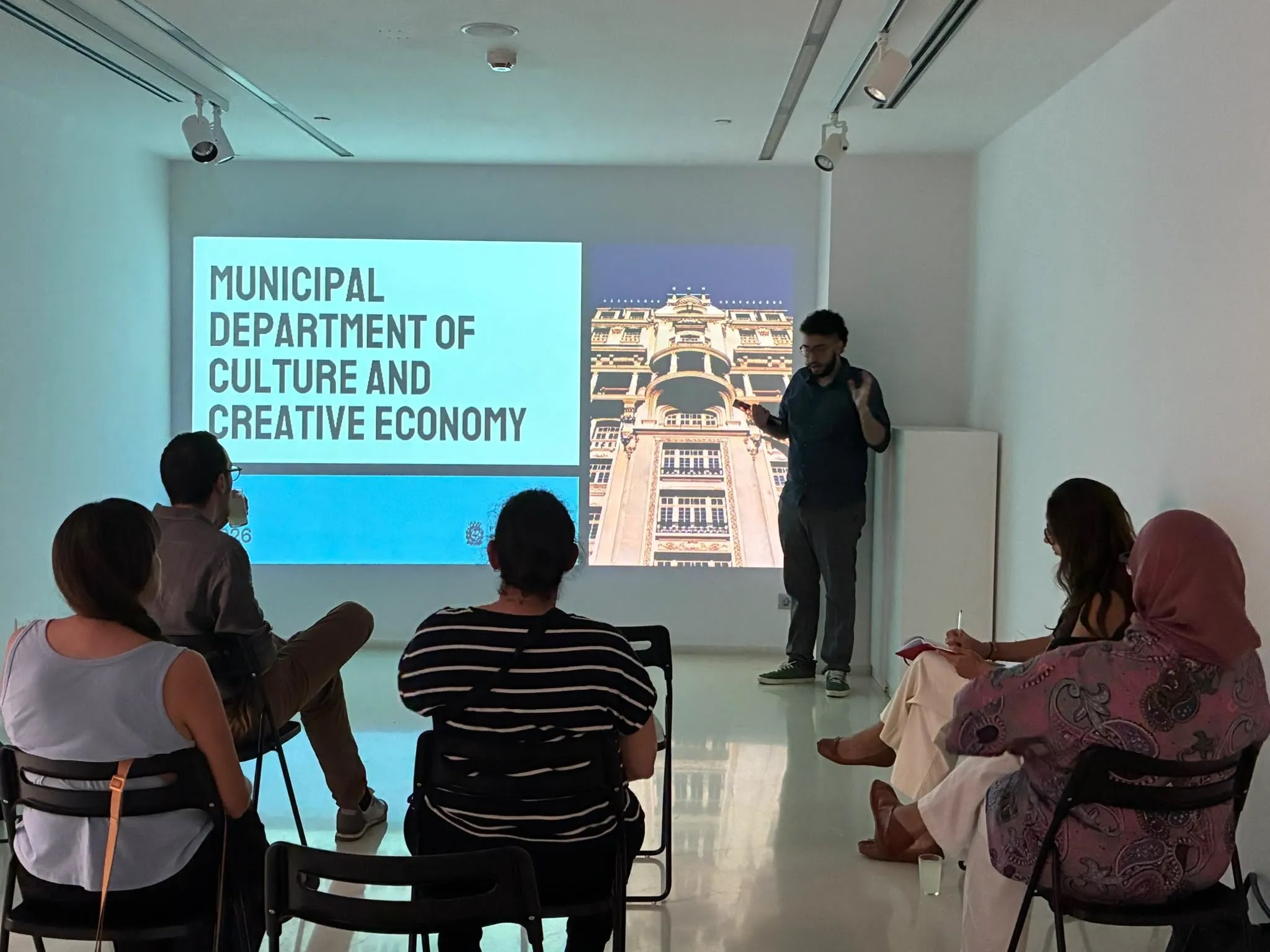
Caio Vitor de Mesquita, Advisor to the Deputy Secretary and Coordinator of the Cultural Merit Evaluation Commission of São Paulo's Municipal Secretariat of Culture and Creative Economy, presented cultural policy as a means of expanding rights and participation across a highly unequal city. Programmes supporting cultural initiatives in peripheral territories and participatory cultural councils provide mechanisms for communities and cultural actors to engage in local decision-making.
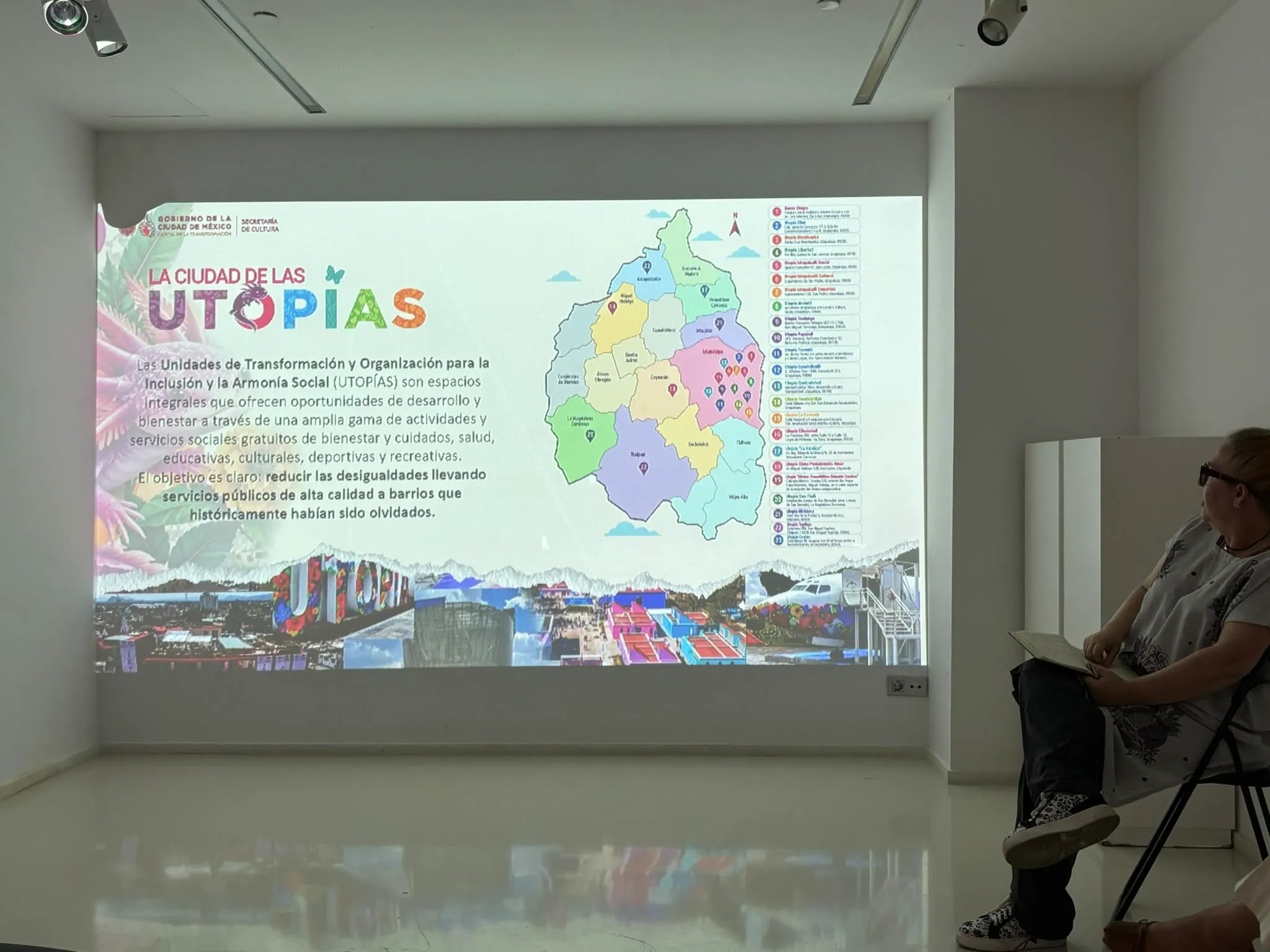
From Mexico City, Ana Francis López Bayghen Patiño, Secretary of Culture, presented the UTOPÍAS model, which combines cultural, sporting and social activities in peripheral areas. The experience illustrated how bringing public infrastructure and services closer to communities can contribute to reducing territorial inequalities and expanding opportunities for participation.
Across these experiences, participants highlighted that participatory democracy requires more than formal consultation mechanisms. Meaningful participation depends on accessible spaces, institutional support, resources and the capacity of communities to influence decisions that affect their lives.
Protecting civic space and freedom of expression
The exchange also examined the relationship between human rights, civic space and cultural freedom.
At Canòdrom – Ateneu d'Innovació Digital i Democràtica, participants explored digital rights, democratic innovation and the risks posed by unequal or discriminatory technologies. The discussion highlighted the importance of ensuring that digital transformation remains grounded in human rights, transparency and participation.
The experience of Taula per Mèxic and the International Cities of Refuge Network (ICORN) further demonstrated how local governments and civil society can contribute to protecting people whose freedom of expression is under pressure. Barcelona's programme for journalists from Mexico, together with ICORN's work with writers and artists, illustrated how cities can create mechanisms of protection and support for individuals facing threats or persecution.
At the Finestres Palestine Bookshop, participants reflected on the relationship between cultural expression, memory and the right to participate in public life. The visit raised broader questions about how independent cultural spaces can contribute to pluralism and ensure that different histories, identities and perspectives remain visible within society.
Participation and human rights in contexts of democratic pressure
The final day of the exchange, held at the UCLG World Secretariat, brought the participating cities together for a collective discussion on censorship, representation, institutional autonomy and belonging.
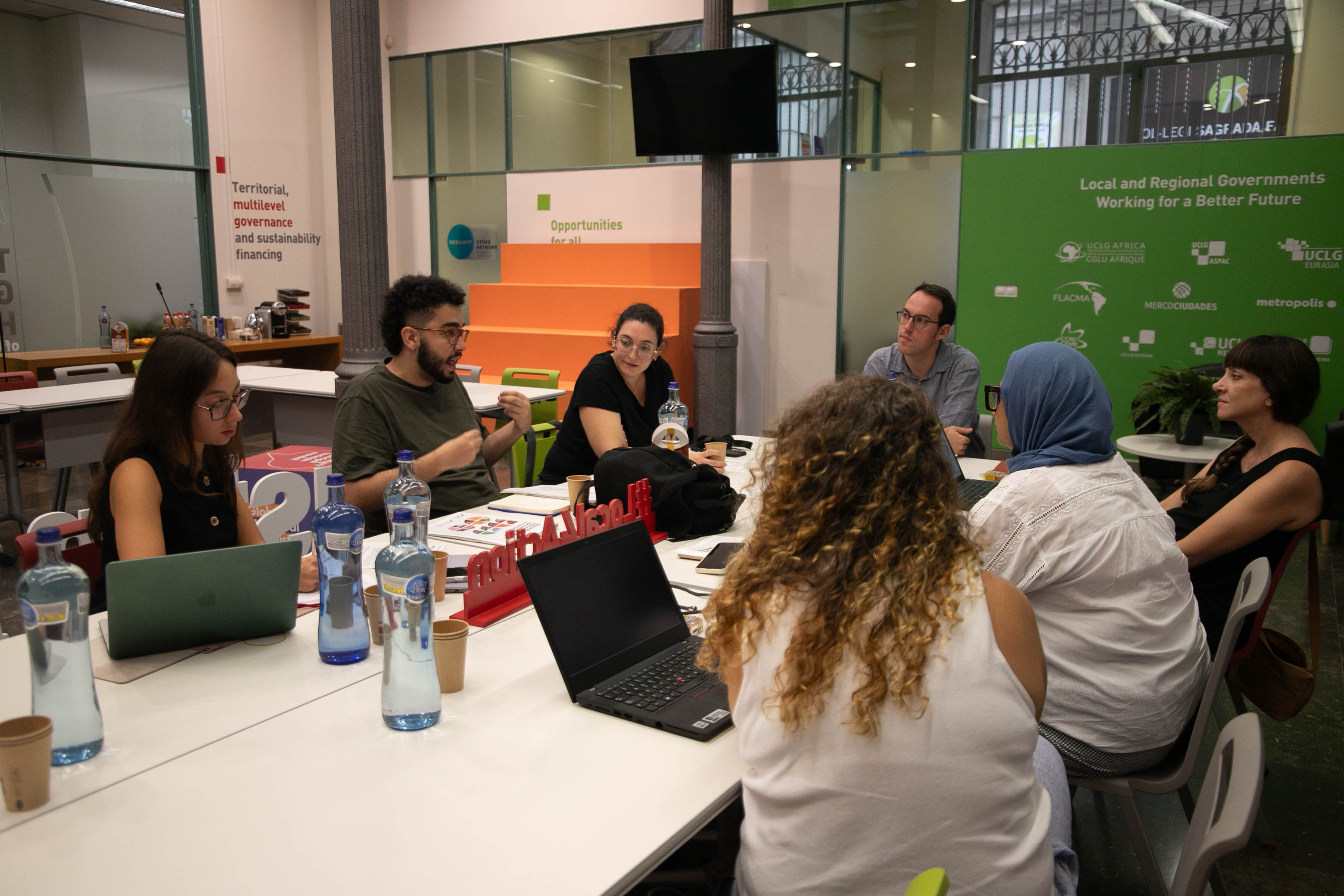
Participants highlighted that restrictions on participation and expression do not always take the form of explicit censorship. They can also emerge through institutional procedures, unequal access, under-representation, procurement mechanisms or the exclusion of certain communities from decision-making spaces.
This led to a broader discussion about how local governments can strengthen democratic resilience. Participants stressed the importance of cultural institutions that are able to host disagreement, facilitate dialogue and involve communities in shaping policies, rather than treating participation simply as consultation.
The discussion also emphasised that culture, social inclusion and democratic participation are closely connected. Where communities experience discrimination or structural barriers to accessing public spaces and services, their ability to participate in civic life is also affected. In this regard, rights-based (cultural) policies were identified as solid anchors to guarantee free and equal access, participation and contribution in cities and territories.
From local experiences to a shared framework for action
Several common lessons emerged across the three days.
First, human rights and culture are closely connected at the local level. Cultural institutions can contribute to freedom of expression, equality, participation, access to information, memory and belonging, even when their work is not explicitly framed as human rights work.
Second, social inclusion requires addressing structural barriers to participation. Access to cultural and civic spaces is shaped by factors including income, geography, language, representation and the availability of accessible public services.
Third, participatory democracy depends on meaningful community involvement. The experiences shared by Barcelona, Manchester, Mexico City and São Paulo showed the importance of co-creation, community power and mechanisms that allow residents and civil society to influence local policies.
Fourth, strong local institutions and civil society networks can help protect civic space. Human rights offices, cultural institutions, community organisations and local protection mechanisms can work together to support people and communities facing discrimination, exclusion or pressure.
Finally, participants highlighted the importance of institutional autonomy, public resources and sustainable partnerships to ensure that these mechanisms can operate over time.
Strengthening local human rights and democratic resilience
For the CISDPDH, the peer learning highlighted the importance of approaching cultural institutions not as a separate policy field, but as part of the broader local ecosystem through which human rights are protected, social inclusion is advanced and democratic participation is strengthened.
The results of the peer learning will also contribute to Culture 21 Plus, the UCLG international framework for cultural rights launched by the UCLG Committee on Culture in collaboration with cities and network partners, and to modules currently being developed.
The experiences shared in Barcelona demonstrated that local governments can create the conditions for residents and communities to participate, express themselves, access public spaces and services and contribute to shaping the societies in which they live. Strengthening these local mechanisms is therefore an important part of building more inclusive, participatory and rights-based cities.
Read the final Report of the peer learning here.
Read the news piece published by Barcelona City Council, in Catalan, here.