

Why is the role of local and regional authorities essential for promoting, realizing, and respecting human rights?
Saint-Louis is the oldest city created by Europeans on the western coast of Africa. It was the Capital of French West Africa (AOF) from 1895 to 1902. At the time, AOF included Senegal, Mauritania, Sudan, Guinea, and Côte d'Ivoire. Capital of Senegal until 1957. Capital of Mauritania from 1920 to 1960.
Saint-Louis: amphibious city with a population of 250,000 inhabitants over an area of 4,650 hectares, is one of the first municipalities of Senegal.
The role of the city of Saint-Louis in promoting, implementing, and respecting Human Rights is very important and essential because the Code of Territorial governments of Senegal states:
Article 3.- Local governments are responsible for the design, programming, and implementation of economic, social, and environmental development actions of local interest.
Local governments are solely responsible, in compliance with laws and regulations, for the appropriateness of their decisions.
They partner, where appropriate, in the implementation of economic, social, and environmental development projects with associative movements and community-based groups, respecting gender equity.
The Municipality of Saint-Louis affirms its anchorage and compliance with international texts and conventions on Human Rights ratified by the State of Senegal, through its adherence to the Declaration of the Rights of Man and of the Citizen of 1789 and to the international instruments adopted by the United Nations and the Organization of African Unity, in particular the Universal Declaration of Human Rights of December 10, 1948, the Convention on the Elimination of All Forms of Discrimination Against Women of December 18, 1979, the Convention on the Rights of the Child of November 20, 1989, and the African Charter on Human and Peoples’ Rights of June 27, 1981, Adherence to the United Nations agendas.
On September 25, 2015, United Nations member states adopted the 17 Sustainable Development Goals (SDGs) of the post-2015 development agenda. The SDGs are based on the Millennium Development Goals, the Agenda that was pursued from 2000 to 2015 at the global level. They will guide sustainable development actions worldwide until 2030.
SDG 11 aims to increase the income of the poorest, ensure access to basic services, and protect all populations from natural or human-made disasters,
And finally, we also highligh our alignment with the national planning framework, the PSE, based on three AXES that summarize the vision “An Emerging Senegal by 2035 with a united society in a state governed by the rule of law.” Inclusive growth (AXIS 1) will help reduce inequalities and effectively and sustainably fund human development programs (AXIS 2) and good governance (AXIS 3).
Why are human rights relevant values and a useful framework for guiding local action?
Human rights provide essential values and a practical framework to guide actions that address the inclusive needs of all populations. This is especially relevant in areas such as social action—through support for impoverished and vulnerable groups—and in the health sector, where subsidies for medical expenses can ensure access for the most disadvantaged. Strengthening social safety nets is key to delivering effective social support, while ensuring a healthy living environment requires robust environmental prevention and protection measures.
Thus, winning the challenge of economic and social development for the promotion and enhancement of human rights means first winning the battle of human capital. This requires access to basic social services and infrastructure, in line with the Mayor's guidelines as outlined in the roadmap of the municipal commissions with the assigned activities and missions:
-
General Administration, Civil Status, and Citizen Services
Missions: All matters related to personnel and municipal administration; Organization and performance of Civil Status; Improvement and optimization of services offered to the population.
-
Good Governance and Citizen Participation
Missions: Implementation of effective management control; Formalization of a regular accountability plan; Establishment of an internal audit system; Work on inclusion and citizen participation; Close collaboration with neighborhood delegates and councils as well as the children's municipal council.
-
Social Action and Solidarity
Missions: Monitoring social equity; Management of municipal social action; Organization of solidarity.
-
Gender, Promotion of Women, Children, and Vulnerable Groups
Missions: Addressing gender-specific needs of the population; Women's and Children's promotion; Support for vulnerable and disadvantaged groups.
-
Microfinance and Women's Entrepreneurship
Missions: Organization of a municipal microfinance system; Promotion of women's entrepreneurship; Women at the heart of the city's economic development.
-
Elders, Mediation, and Conflict Prevention
Missions: Establishment of a municipal council of Elders; Monitoring and prevention mechanisms for conflicts; Mediation, alert, and dispute resolution systems.
-
Hygiene and Public Health
Missions: Health education and prevention; Strengthening the health system; Management of public hygiene.
-
Education and Literacy
Missions: Monitoring the school rehabilitation program; Support to schools (logistics, furniture...); Program to fight school dropout; Emphasis on quality; Motivation system for learners at the municipal level; Literacy program and promotion of national languages.
-
Training and Employment
Missions: Directory of training needs; Support for job seekers; Training and integration follow-up; Focus on employability.
-
Youth and Citizenship
Missions: "Everything for a new type of citizen"; Youth development; Support for umbrella organizations.
-
Safety, Risk, and Disaster Prevention
Missions: Risk prevention mechanisms; Flood management; Disaster simulation program.
-
Environment, Sustainable Development, and Living Environment
Missions: Everything related to living environment (urban furniture, public spaces, parks, gardens, and squares); Waste collection and removal system; Emphasis on plastic waste management and recycling; Support for the Green Cities program (Sustainable and Green Cities); Identification of Sustainable Development Projects; Strengthening eco-responsible behaviors; Training on SDG localization, sand removal, and sanitation.
The tricentennial city of Saint-Louis of Senegal, created in 1659, commits to the global campaign “10, 100, 1000 Human Rights Cities and Territories for 2030” initiated by the Committee on Social Inclusion, Participatory Democracy, and Human Rights of UCLG at the UCLG Congress – World Summit of Local and Regional Leaders to promote Human Rights Initiatives at the level of our local governments.
Indeed, eradicating extreme poverty is intrinsically linked to the protection of human rights. Our Municipality places Human Rights at the center of urban and territorial governance to ensure universal access to quality basic services, nutrition, health, and education, economic opportunities, access to adequate housing, and disaster risk prevention for the most vulnerable. These are essential components of localized policies to fight poverty.
-
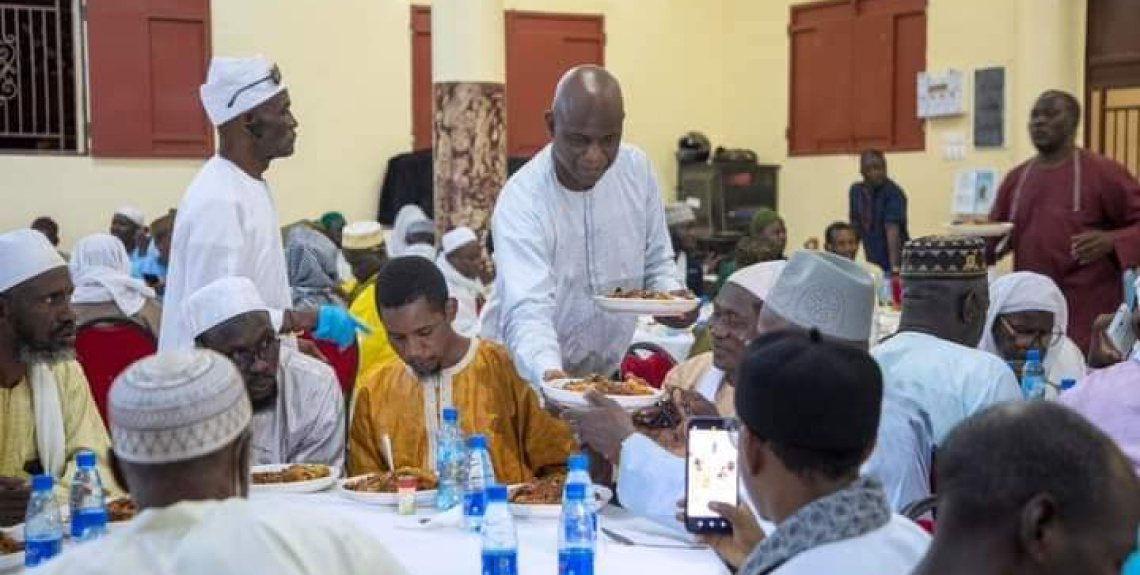
Support for vulnerable groups during COVID-19 through food aid to vulnerable populations and daaras (Qur'anic schools) for talibés.
-
Acquisition of medical equipment to strengthen several health structures in Saint-Louis: cervical cancer detection devices, ultrasound machines, dialysis machines, scanner.
-
Funding of training for the employability of 1,200 young people in various trades (driving license, aquaculture, poultry farming, horticulture, plumbing, construction, etc.).