

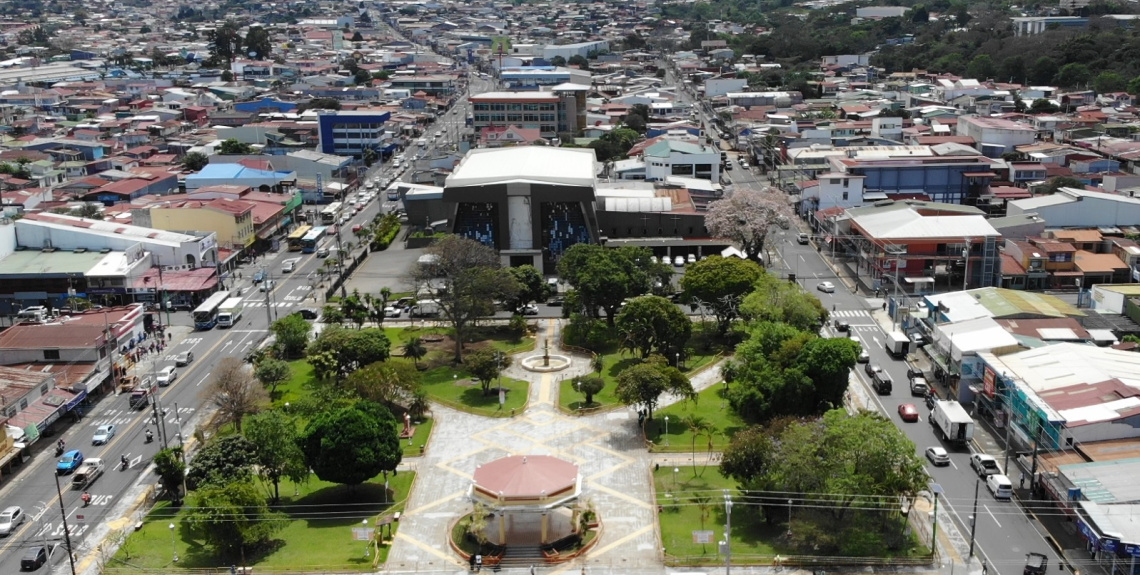
Local governments are essentially the closest level of governance to the people—addressing the immediate development needs of communities. As administrative units, they understand, regulate, and engage with local social dynamics, highlighting their vital role in promoting, upholding, and protecting human rights.
In this approach, governance refers to how local governments interact with development models. It is from this interaction that practices and procedures for distributing and allocating available resources are defined. Consequently, governance models must reflect optimal administrative management—simplifying procedures, prioritizing, and resolving people’s needs based on technical criteria—as a localized state response to building civic capacities and constructing societal well-being.
Such actions are embedded in operational and financial planning processes. To ensure transparency, equality, and accessibility, they must be supported by clearly defined administrative procedures. This requires a multilevel and multi-stakeholder political and technical commitment for clear rule application regarding human rights protection in managing collective resources.
Human rights and development essentials guarantee accessibility, social inclusion, and non-discrimination—rights that everyone must access in a context of equity, social justice, and human development. Through its understanding of local needs, the local government will be better positioned to identify the types and dimensions of actions necessary to strengthen promotion and protection mechanisms for the rights of disadvantaged groups, facilitating human development in a context conducive to building social well‑being.
A major advantage for local governments lies in their ability to design public policies that address accumulated social tensions, reflect the specificities of society, and highlight major civic issues as structural gaps. Some of these are contingent and can be addressed with interventions aimed at shifting cultural practices and behaviors that threaten the rights due to their exclusionary or violent nature.
Hence, the critical importance of the local government as the articulating agent of change—attending to social needs based on equality, non-discrimination, accountability, citizen participation, respectful co-creation with community knowledge, and the transparency of public agendas—transforming commitments into tangible results through rights-based public policies.
In conclusion, it is essential to ground actions led by local governments in a rights-based approach to eliminate the main sources of freedom deprivation—particularly those tied to the conditions necessary for development. Freedoms depend fundamentally on social and economic institutions; therefore, investment priorities must guarantee minimum access to education, health, culture, social protection, and employment—through institutional and social mechanisms that foster access to these opportunities.
This local government believes that the primary way to develop meaningful actions is through strengthening organizational and associative capacities. These capacities help expand freedoms and collective skills, aligning material and human resources to improve well‑being and protect the rights of the most vulnerable.
Moreover, engaging in instrumental exchanges between local governments around the world—each addressing diverse social realities—adds value by enhancing knowledge and skills to improve quality of life. This approach capitalizes on a dialectical relationship among actors for more accurate reality analysis and improvements in local and regional conditions for accessing well‑being.
In conclusion, local governments need to link their efforts in raising awareness, protecting, and guaranteeing human rights with strategies supporting Sustainable Development Goals (SDGs). These should be seen as protective actions across human rights domains and implemented to support persons in vulnerable situations—due to ethnicity, migration status, sexual orientation, gender identity, or socio-economic exclusion.
-
Thematic Area: Right to Education
Municipal Scholarships for Education: this consists of the allocation of conditional financial subsidies aimed at individuals in situations of social and economic vulnerability to ensure their permanence in formal education systems in the case of minors, and in the case of adults, it supports the creation of conditions for upward social mobility through education.
-
Thematic Area: Social Outreach Projects, Local Contributions to the Fulfillment of the SDGs
Measurement of Local Contributions to the Fulfillment of the SDGs, carried out through participatory strategies that ensure social inclusion in multi-actor and multi-level dimensions, including community and institutional processes to strengthen capacities in human rights and the SDGs.
-
Thematic Area: Equality and the Fight Against Poverty – Women
Entrepreneurship for Women in the Canton of Goicoechea: this involves the creation of spaces for participation and social inclusion through the economic integration of productive ideas and projects developed by women, mainly those who are heads of household.
-
Dialogue Tables: Shared Responsibilities for Sustainable Development

To learn more about Goicoechea, visit https://munigoicoechea.go.cr/
To stay up to date with Goicoechea's initiatives, visit https://munigoicoechea.go.cr/inicio/noticias