

Why is the role of local authorities essential in promoting, realizing, and respecting human rights?
The action of local governments is today essential and vital, as we saw during the health crisis. It allows direct access to populations and exceptional responsiveness. Local governments have levers for citizen creation and creativity thanks to the skills developed by public services. It is a chance and opportunity to build strategies and respond to the needs of populations. It is a political lever to uphold their rights. The experience of city networks has shown that collective action creates dynamic, successful initiatives. Being close to the population, knowing their problems and inequalities enables the realization of human rights and providing concrete responses to individuals to uphold their rights.
Why are human rights relevant values and a useful framework for guiding local action?
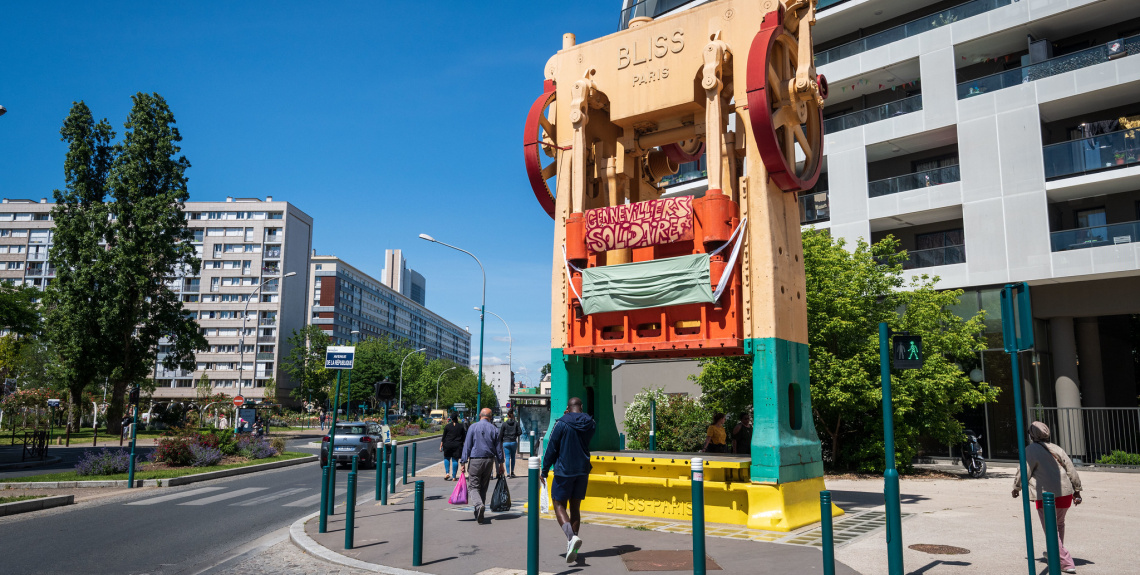
The fight for human rights is an integral part of the history of Gennevilliers because it reflects the values of respect and dignity that everyone has the right to demand. Human rights must be common to all, without distinction of gender, social or ethnic origin. They represent what is most basic and common to claim for ourselves and others. Experience shows that solidarity with residents but also with peoples or societies whose human rights are violated or poorly applied encourages respect and constructive exchanges towards a better world: creating bridges and human relationships, transforming societies by developing networks among populations, denouncing injustices and inequalities, asserting everyone’s right to enjoy their rights.
The strength of the collective represents a relevant and effective platform for work and action. Unfortunately, human rights are often violated. Joint action will allow us to develop coordinated interventions and initiatives that will strengthen and give visibility to the message we hope to convey and the objectives we want to achieve. Sharing experiences can be useful.
-
Youth Health Space (public health)
Adolescents and young adults often neglect their physical and mental health. However, their needs are essential for their balance and development. The Youth Health Space was created to respond anonymously to young people and support parents in their parenting. Interventions have also been implemented in local middle and high schools: consultations with psychologists, general practitioners, dietitians, health prevention, and group discussions for youth and/or parents, communication mediation. This space serves over 2,000 young people and 200 parents per year.
-
Local Observatory of Discrimination (Anti-discrimination and anti-xenophobia)
The city launched its local discrimination observatory, composed of 9 elected officials and 9 residents (unique in France) to detect discrimination cases and work with residents to identify them. In a working-class city context, discrimination is more blatant. The goal is to understand and address it, then alert government bodies about exclusionary processes affecting part of the population. The city already conducted a shared territorial diagnosis in 2018 crossing origin and gender in the field of employment regarding discrimination. This observatory was created to go further and involve residents.
-
Food Basket Distribution (Right to food and food security)
The health crisis and lockdown worsened financial and social difficulties for lower-income groups, with some families severely impacted by unemployment. In response, the city distributed food baskets to help the most vulnerable eat balanced and dignified diets: fresh products (fruits, vegetables, eggs) and non-perishable goods (rice, pasta, flour, canned food). Around 35,000 baskets were distributed between 2020 and 2025.