

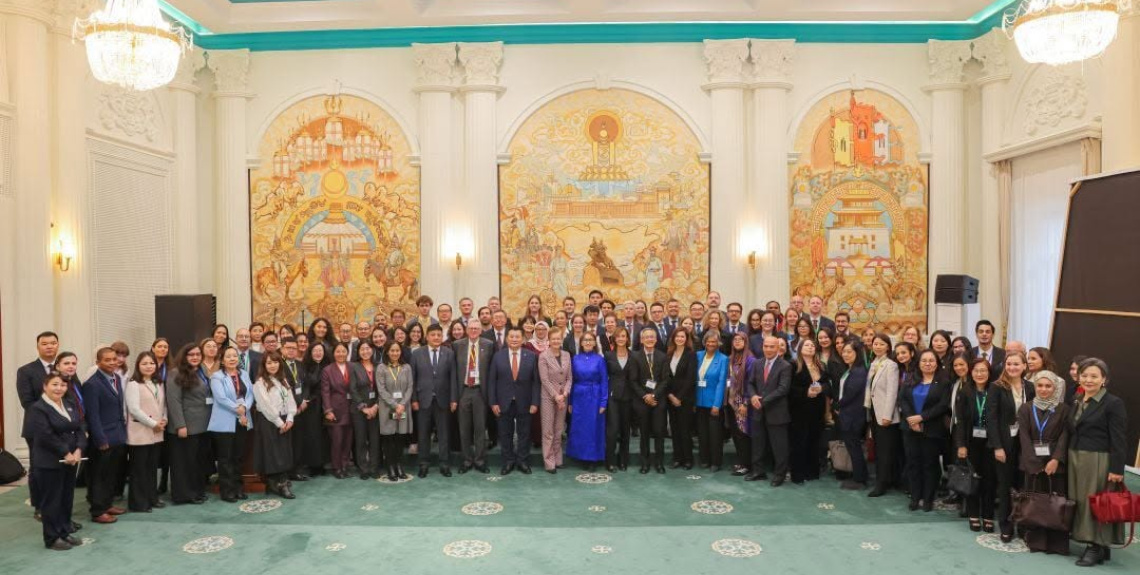
United Cities and Local Governments (UCLG) participated in the 24th Informal Asia-Europe Meeting (ASEM) Seminar on Human Rights, “The Future of Human Rights – From Local to Global”, held from 12 to 14 October 2026 in Ulaanbaatar, Mongolia. UCLG was represented by Adrià Duarte, Coordinator of the UCLG Committee on Social Inclusion, Participatory Democracy and Human Rights (CISDPDH), who moderated a working group on multilateral human rights protection and the Seminar’s closing panel on strengthening cooperation across local, regional and global levels. The Seminar was co-hosted by the National Human Rights Commission of Mongolia and the Ministry of Foreign Affairs of Mongolia, bringing together government representatives, National Human Rights Institutions (NHRIs), civil society organisations, academia and international organisations from across Asia and Europe.
Against a backdrop of geopolitical tensions, technological transformation, climate pressures and growing challenges to multilateral cooperation, the Seminar provided a platform to discuss how local and regional human rights frameworks can respond to contemporary challenges and translate international commitments into meaningful protection on the ground. Discussions focused on strengthening human rights protection across levels of governance.
The Seminar explored three interconnected dimensions of human rights protection: global, regional and domestic. Participants examined the challenges facing international human rights mechanisms, opportunities for stronger cooperation between Asian and European regional frameworks and the role of national institutions and local actors in ensuring that human rights commitments are effectively implemented.
On 13 October, Adrià Duarte moderated Working Group 3 on Human Rights Protection at the Domestic Level, which examined how national institutions, legal frameworks and local actors can help translate international human rights obligations into effective, on-the-ground protection. Discussions addressed the role of National Human Rights Institutions, the importance of safeguarding civic space, and the contribution of local and regional authorities and community-based organisations to addressing human rights challenges in people's everyday lives.
The working group highlighted the importance of strengthening connections between national human rights systems and local action. In particular, discussions explored how local and regional governments can be better recognised, resourced and connected to national and international frameworks, including through the Human Rights Cities movement. By embedding human rights principles in local policies and services, municipalities can help address issues such as discrimination, access to justice and the right to adequate housing.
On 14 October, Duarte also moderated the closing panel, “Connecting the Dots: Strengthening Human Rights Protection Across Local, Regional and Global Levels”. The panel brought together Karen Gomez Dumpit, former Commissioner of the Commission on Human Rights of the Philippines; Tihamér Czika, Policy Officer for Human Rights at the European External Action Service (EEAS); Rafendi Djamin, of the Human Rights Resource Center and Indonesia’s first representative to the ASEAN Intergovernmental Commission on Human Rights (AICHR); and Reem Mazzawi, Human Rights Officer at the Office of the United Nations High Commissioner for Human Rights (OHCHR).
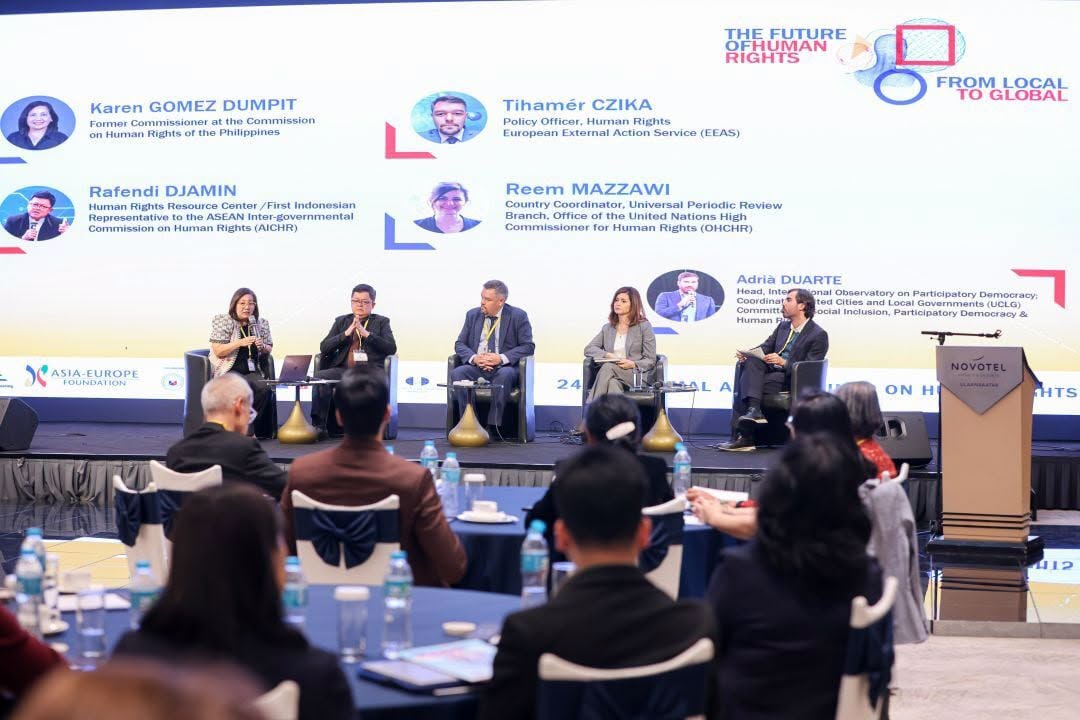
The discussion explored how actions at local, regional and global levels can reinforce and support one another, from local human rights institutions contributing to regional mechanisms to international frameworks which support implementation, including UN treaty bodies and OHCHR. It underlined the importance of stronger coordination and effective channels for cooperation to ensure that international commitments translate into concrete improvements in people's lives, while enabling local experiences and challenges to inform regional and global human rights processes.
More broadly, the Seminar examined opportunities for enhanced cooperation between Asia and Europe, recognising the value of cross-regional dialogue, peer learning and the exchange of good practices. While the two regions have different institutional arrangements and approaches to human rights protection, their experiences offer valuable lessons for strengthening existing mechanisms, addressing institutional gaps and responding collectively to emerging challenges.
UCLG and its Committee on Social Inclusion, Participatory Democracy and Human Rights (CISDPDH) are committed to advancing the recognition of local and regional governments as key actors in the protection and promotion of human rights. Through the Human Rights Cities approach and international cooperation among local governments, UCLG continues to advocate for placing human rights at the centre of public policies and strengthening the connections between local action and global human rights agendas.
Find more information about the 24th Informal ASEM Human Rights Seminar here.
Read the ASEMHRS24 Concept Note paper here.