

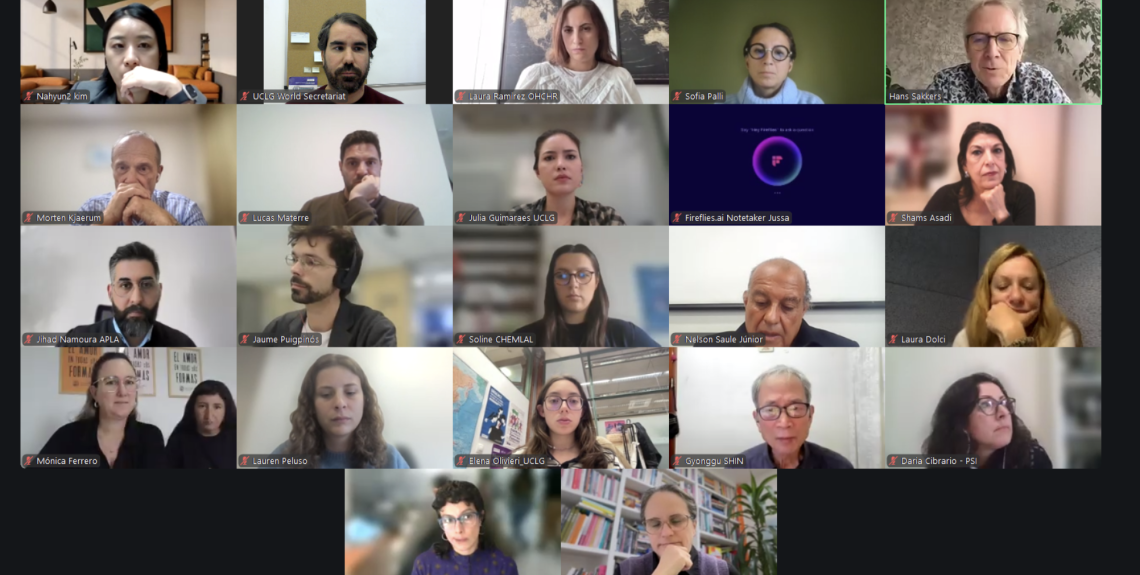
On 21 October 2026, the Committee on Social Inclusion, Participatory Democracy and Human Rights (CISDPDH) brought together more than 70 participants, including members of the Global Campaign “10, 100, 1,000 Human Rights Cities and Territories by 2030,” partner organisations and other local governments, for an online meeting dedicated to localising the New Global Charter-Agenda for Human Rights in the City and defining the next steps of the Campaign.
Four months after its adoption at the UCLG World Congress in Tangier, the meeting reaffirmed the Charter-Agenda as the thematic backbone of the Campaign and addressed a shared strategic goal: transformingthe Charter-Agenda into a living instrument in cities and territories of all sizes, capacities and contexts.
Turning the Charter-Agenda into everyday practice
The meeting opened with remarks by Adrià Duarte, Coordinator of the UCLG Committee on Social Inclusion, Participatory Democracy and Human Rights, who highlighted that the Campaign now includes more than 120 local and regional governments. In light of this growth, Duarte stressed the need to keep the momentum and reach new cities across all continents.
He was followed by Hans Sakkers, International Strategy and Funding Program Manager of Utrecht, on behalf of the Co-Presidency of the Committee. Recalling the launch of the Campaign in Daejeon in 2022, he presented the Charter-Agenda and its 37 rights highlighting key areas of focus such as care, proximity, public space and participatory democracy, as a commitment to be put into practice:
“Localising human rights is not a technical exercise – it is about dignity, care, participation, and the belief that every person, in every corner of every city, deserves to live a life of rights.”
He also invited members to reflect on how cities can support each other more systematically through peer reviews and recommendations, as a step towards the professionalisation of the movement.
Connecting local action with the United Nations human rights agenda
The opening session also featured an intervention by Laura Dolci, Coordinator of the Global Alliance for Human Rights of the Office of the High Commissioner for Human Rights (OHCHR). Launched on the occasion of the 80th anniversary of the Universal Declaration of Human Rights in 2028, one of its key work streams is accelerating human rights at the local level. Under the umbrella of the Global Alliance, the Committee will continue its long-standing collaboration with the OHCHR and help carry the voice of local and regional governments to the United Nations.
New members bringing rights into practice
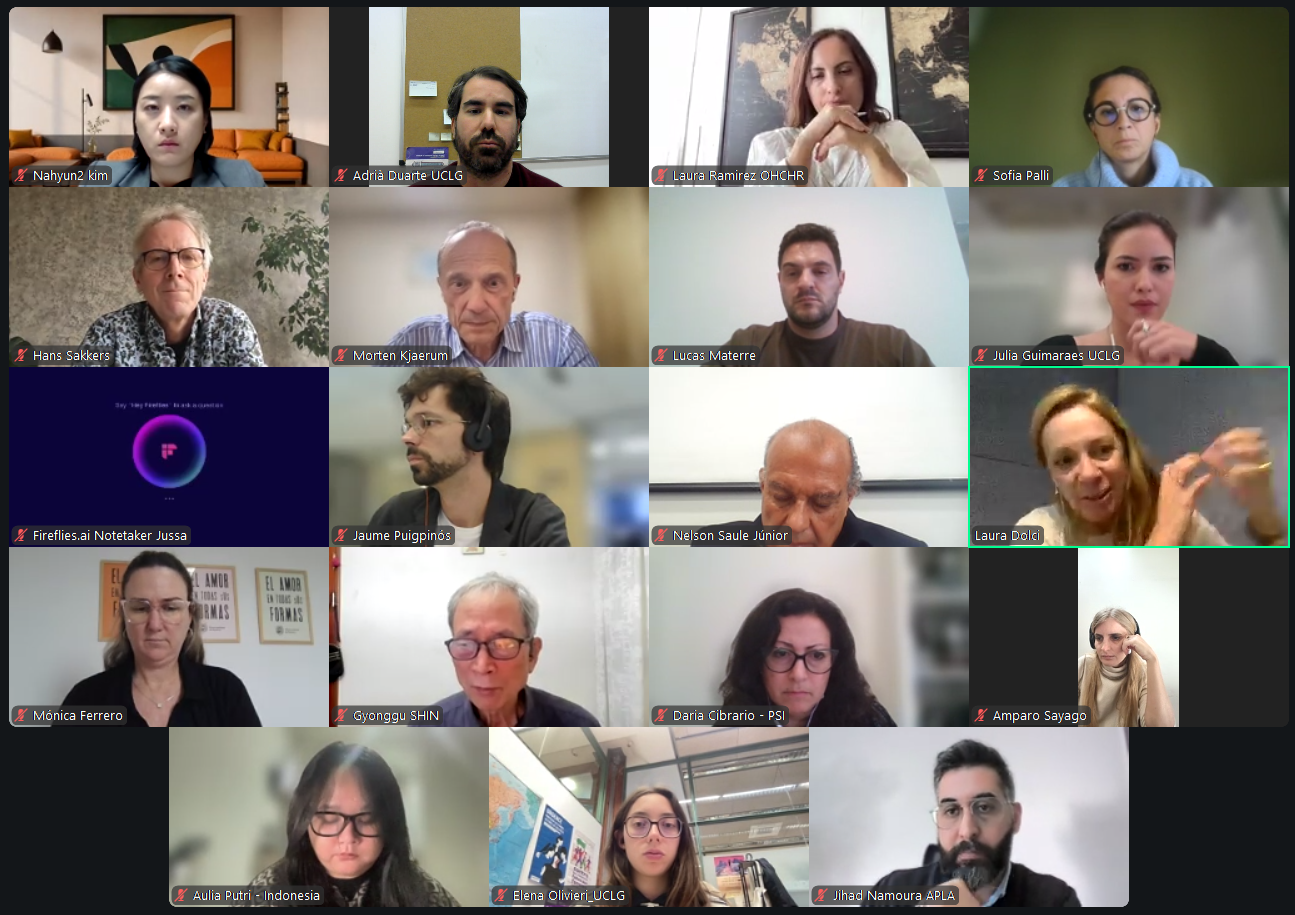
A highlight of the meeting was the introduction of new members joining the Campaign:
-
Suwon Special City, represented by Nahyun Kim, Human Rights Officer at the Suwon City Human Rights Center, presented its human rights impact assessment system, which identifies risks of discrimination in local administration and recommends institutional improvements.
-
Rosario, represented by Mónica Ferrero, Secretary for Equality, Gender and Human Rights, shared its work on historical memory, the recognition of sexual diversity and public health.
-
The Association of Palestinian Local Authorities (APLA), represented by Jihad Nammoura, Capacity Building Officer, highlighted the right to the city and the right of the city as essential to restoring services and dignity in a context of occupation.
-
Neuquén, represented by Lucas Gastón Materre, Undersecretary for Human Rights, Diversity, Cultural Pluralism, Gender and Equality, presented MIGRANEQUÉN, a free, multilingual municipal platform for welcoming migrants, refugees and newcomers, designed with their participation.
Together with Kathmandu, which also joined the Campaign and shared its policies on social justice, free legal aid and climate justice, this new wave of members reflects the growing diversity of the Human Rights Cities movement.
Bringing human rights to WUF28
The meeting also turned to the road towards the World Urban Forum 2028 (WUF28), the main space for dialogue between the United Nations and cities, which Mexico City will host. Maria Fernanda Rodríguez, Deputy Director for International Cooperation, presented the city’s ambition to make the Forum a meeting point between local governments, social movements and territorial actors, with human rights as the common thread.
“We want to place human rights at the centre of the post-2030 agenda and build a more inclusive multilateralism, where local and regional governments have a stronger voice. The themes of the Charter-Agenda are fully aligned with our roadmap towards WUF28.”
The roadmap is structured around four thematic axes:
-
Care and social rights, with a focus on gender equality and community well-being;
-
Housing and the right to the city, guaranteeing access to decent and affordable housing;
-
The commons, including the city itself as a common good and the sustainability of life;
-
Territorial justice and solidarity, addressing the shared responsibilities of a metropolitan city beyond its boundaries.
Throughout 2027, Mexico City will hold dialogues and participatory processes to define the spaces to be promoted at the Forum. The New Global Charter-Agenda, the Global Campaign and the Committee are central references in this process, making WUF28 a concrete horizon for the Human Rights Cities movement.
From commitments to local action
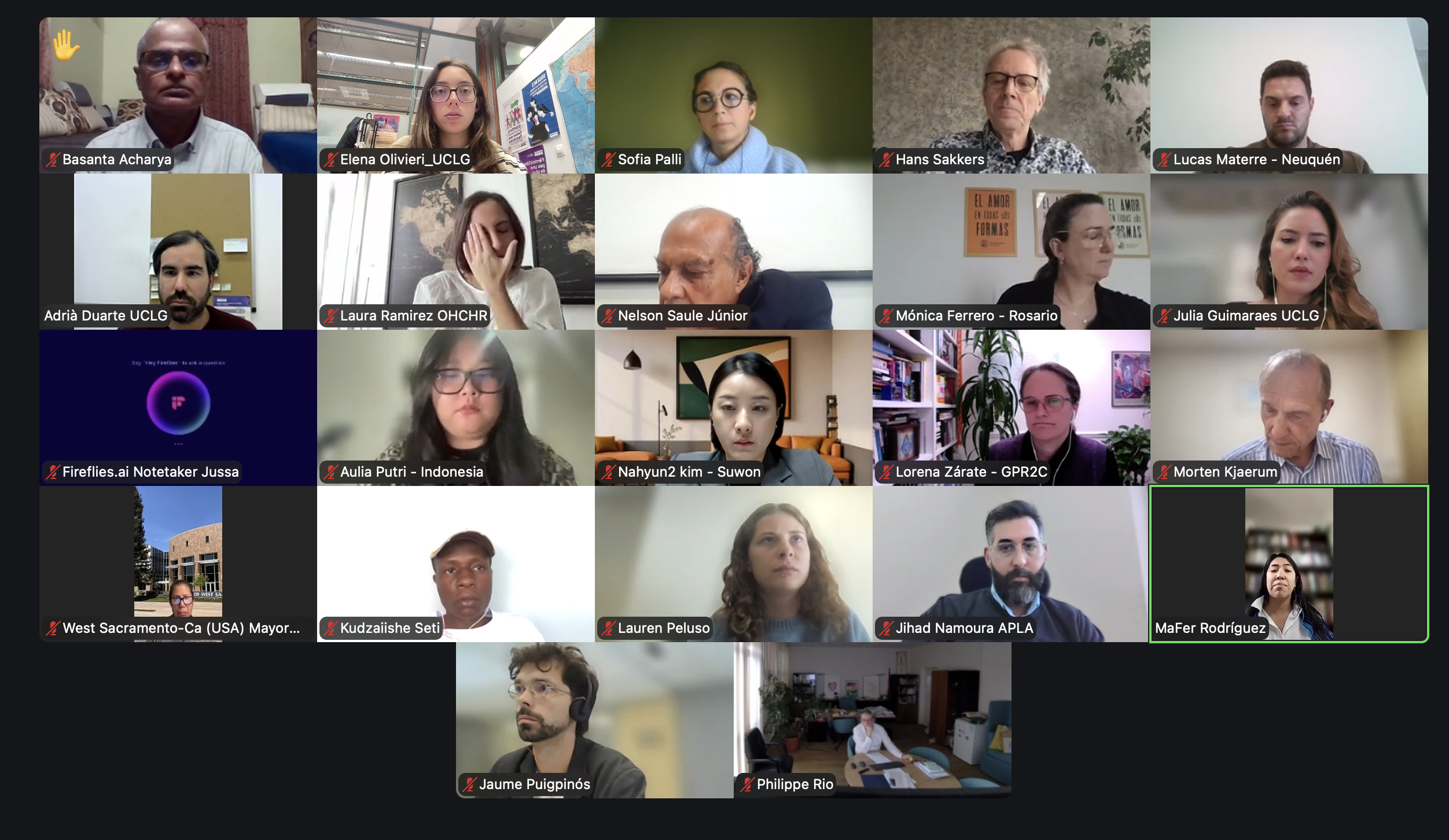
The open discussion gathered mayors, cities and partners around the localisation of the Charter-Agenda. Philippe Rio, Mayor of Grigny and Co-President of the Committee, linked it to Grigny’s work on cultural rights, education and the fight against poverty. Reflecting on the movement’s next steps, he stated:
“The Charter-Agenda is a very concrete guide and the WUF is a concrete horizon. Together, they invite us to set an ambitious roadmap.”
Lauren Peluso, from the General Delegation for International Relations of the City of Paris, highlighted the city’s commitment to affordable housing, refugee’s rights, climate action and LGBTQIA+ rights, and called for strong alliances between democratic cities. Lorena Zárate, Founder and Co-Coordinator of the Global Platform for the Right to the City, presented the Charter-Agenda as a tool to bring coherence across the post-2030 development agenda, in a context of shrinking civic space. Morten Kjaerum, Adjunct Professor at Aalborg University and affiliated scholar at the Raoul Wallenberg Institute, shared the work being done in partnership with the OHCHR to develop an accreditation system for Human Rights Cities, which is to be launched at the 80th anniversary of the Universal Declaration of Human Rights in December 2028. Daria Cibrario, Senior Policy Officer at Public Services International (PSI), called for the Charter-Agenda and the PSI–UCLG Global Framework Agreement on Social Dialogue and Cooperation to reinforce each other in guaranteeing the rights of local public service workers.
Participants also identified shared needs for the coming phase: simple implementation guidelines, common indicators to measure progress, and support mechanisms between cities.
Towards WUF28 and 2028: scaling up the Human Rights Cities movement
The meeting closed with an open call for good practices to inform the next phase of the implementation of the Charter-Agenda, and help us bring forward what is already happening on the ground. Looking ahead to WUF28 in Mexico City and the 80th anniversary of the Universal Declaration of Human Rights, a clear priority has emerged: turning the New Global Charter-Agenda into everyday practice and strengthening local and regional governments as duty-bearers and leaders of human rights.
We warmly thank our members and partners for their active participation!
Grigny, Utrecht, Seine-Saint-Denis, Gwangju, Mexico City, Vienna, APLA, Kathmandu, Kisumu, Neuquén, Paris, Rosario, Suwon City, Valparaíso, Quilmes, Gdansk, Global Platform for the Right to the City (GPR2C), Public Services International (PSI), OHCHR and many more