

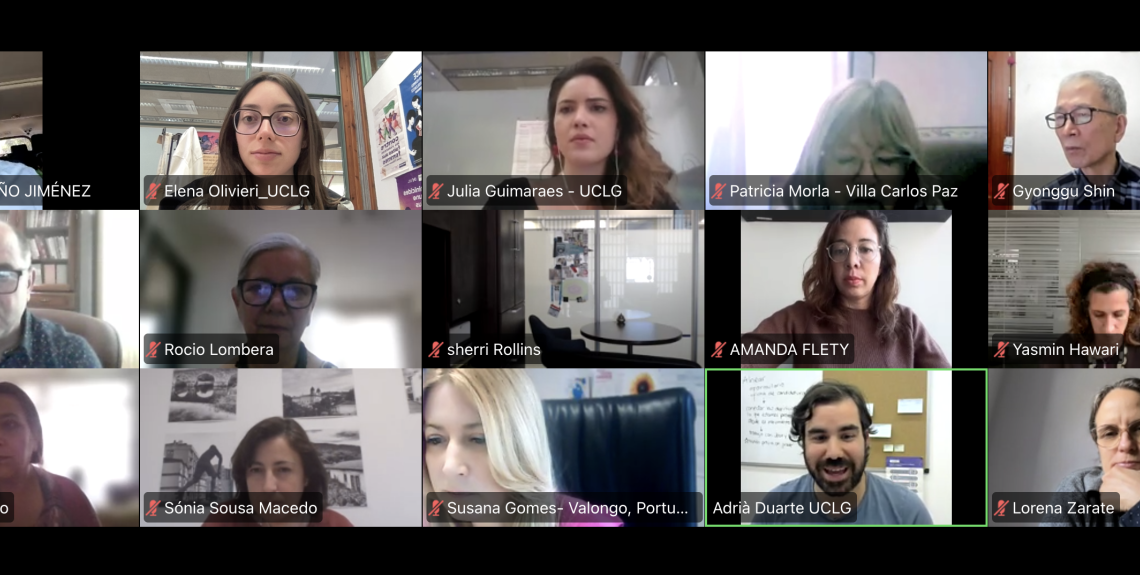
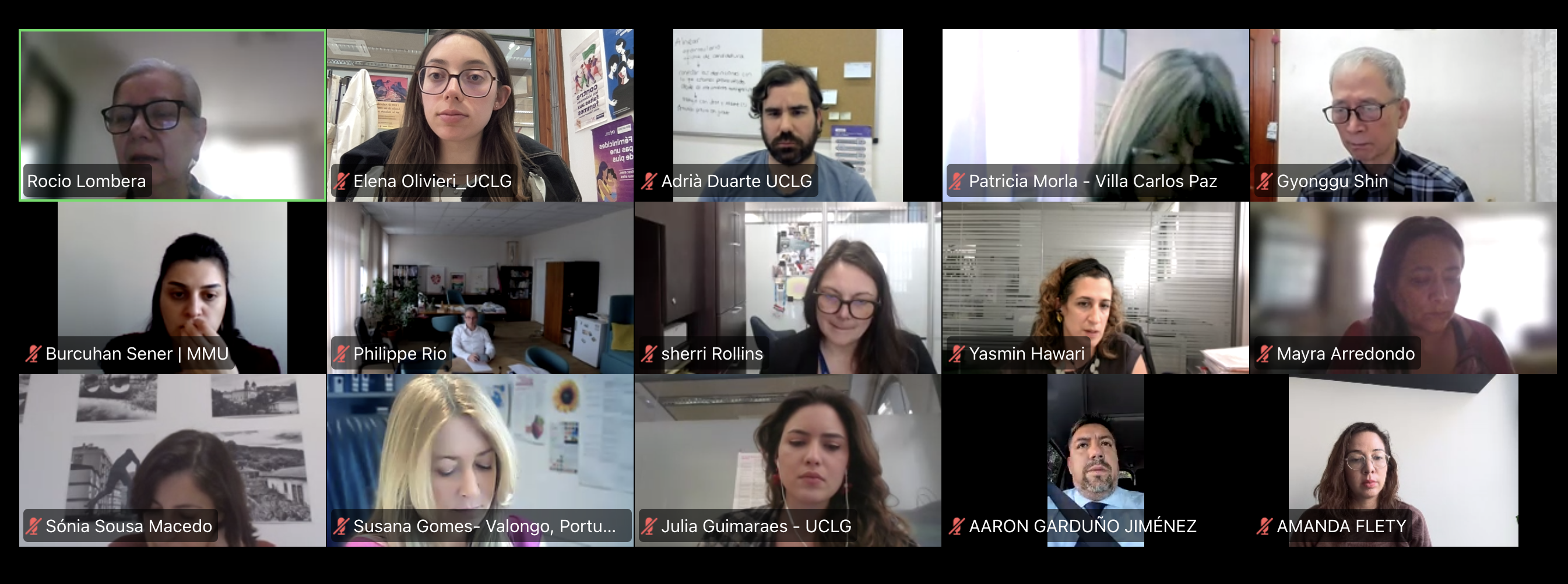
On 28 April 2026, United Cities and Local Governments (UCLG) and its Committee on Social Inclusion, Participatory Democracy and Human Rights (CISDPDH) brought together members of the Global Campaign “10, 100, 1,000 Human Rights Cities and Territories by 2030” for an online meeting dedicated to strengthening cooperation, sharing local experiences, welcoming new members and defining the next steps of the Campaign.
The meeting reaffirmed the key role of local and regional governments in defending and protecting human rights, democracy and social cohesion, in a time of increasing inequalities and democratic backlash.
Placing human rights at the heart of UCLG’s agenda
The meeting opened with remarks by Adrià Duarte, Coordinator of the UCLG Committee on Social Inclusion, Participatory Democracy and Human Rights, who emphasized the importance of the Campaign as a collective space to strengthen the Human Rights Cities movement.
He highlighted its key role in advancing and promoting the adoption of the New Charter-Agenda for Human Rights in the City, as well as in placing the human rights agenda at the center of the upcoming UCLG World Congress in Tangier.
He was followed by Philippe Rio, Mayor of Grigny and Co-President of the Committee, who underscored the significance of this moment for the municipalist movement. Reflecting on four years since the launch of the Campaign, he acknowledged the progress achieved while stressing the need to go further:
“After four years of the Campaign, we have gathered a community of more than 100 local and regional governments, but we need to go further. The UCLG Congress will be an important milestone: we must place the human rights agenda at the heart of UCLG.”
The Mayor also underscored the Charter-Agenda as the outcome of a collective process and as a key foundation for future joint action by local and regional governments committed to advancing human rights.
Connecting local action with the United Nations human rights agenda
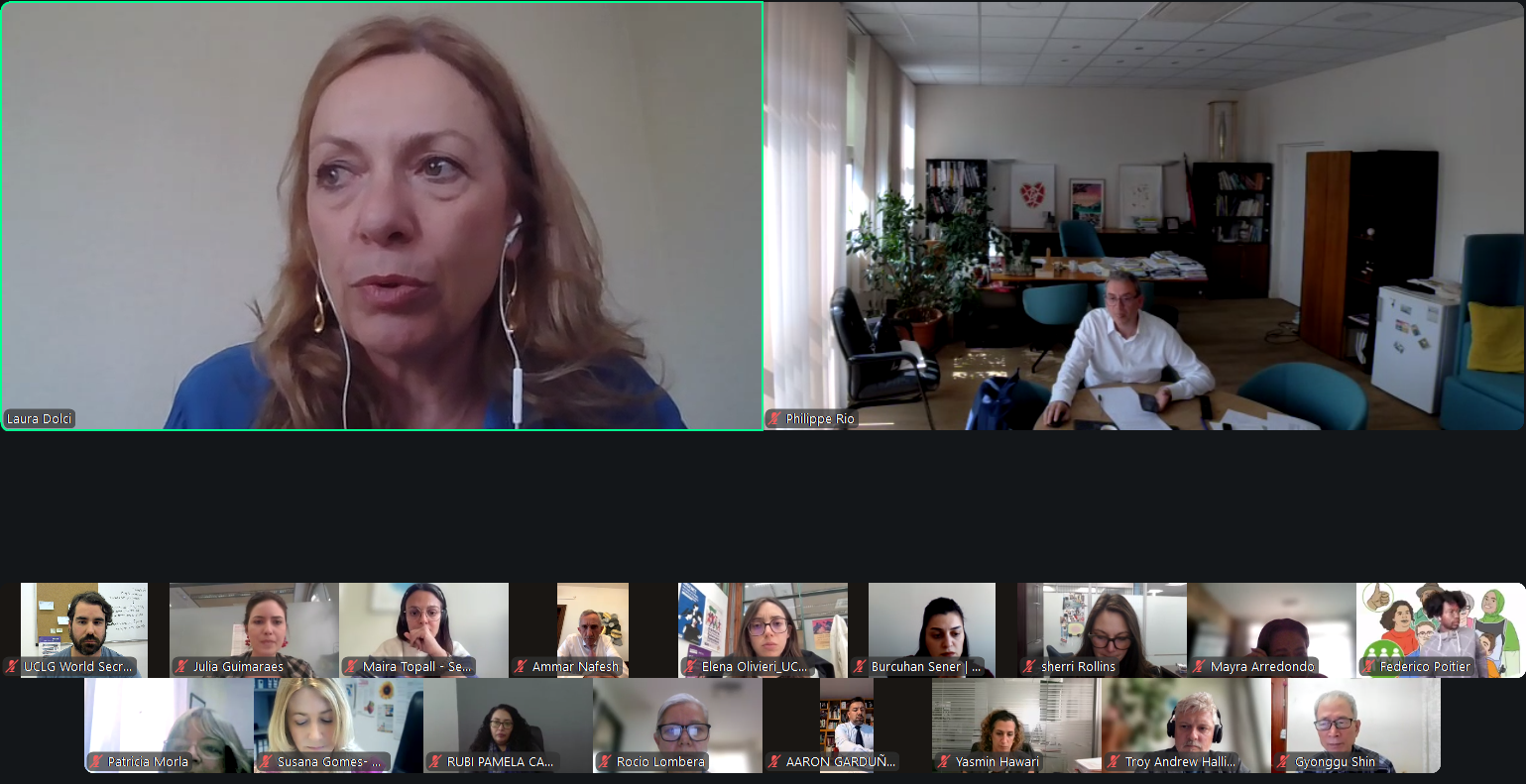
The opening session also featured an intervention by Laura Dolci, Coordinator of the Global Alliance for Human Rights, a cross-regional and multi-stakeholder initiative by the Office of the High Commissioner for Human Rights (OHCHR) aimed at connecting, amplifying and accelerating human rights action. Designed to bring together diverse actors—from governments to civil society, young people, businesses, and local authorities—it seeks to promote and protect human rights, shift narratives, and rebuild trust in human rights as a universal guiding principle, through knowledge sharing and co-creating initiatives.
She stressed the High Commissioner’s ambition to launch a broad mobilization for human rights in the lead-up to 2028, the 80th anniversary of the Universal Declaration of Human Rights.
In a context of polarization and democratic regression, she emphasized the need to reconnect human rights with people’s everyday realities and to strengthen alliances across levels of governance and sectors.
“Human rights must become more relatable and truer to people. They can often sound abstract, but ultimately, they deal with human beings. Cities are where human rights live, where they are brought to people and to their homes.”
Laura Dolci also highlighted the relevance of the Guidance Framework for Creating a Human Rights City, developed by OHCHR and UCLG, as a practical tool to support cities and territories in embedding human rights in local governance.
Human Rights for a renewed multilateralism
The discussion was further framed by Lorena Zárate, Founder and Co-Coordinator of the Global Platform for the Right to the City, who reflected on the role of Human Rights Cities within the framework of local multilateralism. She stressed that reclaiming human rights is especially urgent in a context of growing inequalities, attacks on rights, and discriminatory narratives.
“Human rights are at the centre of today’s struggles against increasing inequalities, attacks on rights, and discriminatory narratives and practices. It is crucial to reclaim and reconfigure human rights in this context.”
Lorena Zárate also linked the discussion to the ongoing update of the UCLG Global Charter-Agenda for Human Rights in the City, as well as to the GOLD VII process, a UCLG-led research initiative on the Economies of Equality and Care. Referring to the Charter—which recognizes 37 human rights in the city—she emphasized the importance of acknowledging not only established rights, but also a new generation of rights, including care, participatory democracy, proximity, and public space.
She further highlighted the recognition of the Rights of Cities—ranging from financing and autonomy to climate justice and international solidarity—as a key element enabling cities to effectively fulfill their human rights responsibilities.
New members and Human Rights Cities putting rights into practice
A highlight of the meeting was the introduction of new members joining the Campaign: the Marmara Municipalities Union, represented by Burcuhan Şener, Director of International Affairs, and Um Al-Basateen Municipality, represented by Ammar Hani Nafesh, Chairman of the Municipal Committee.
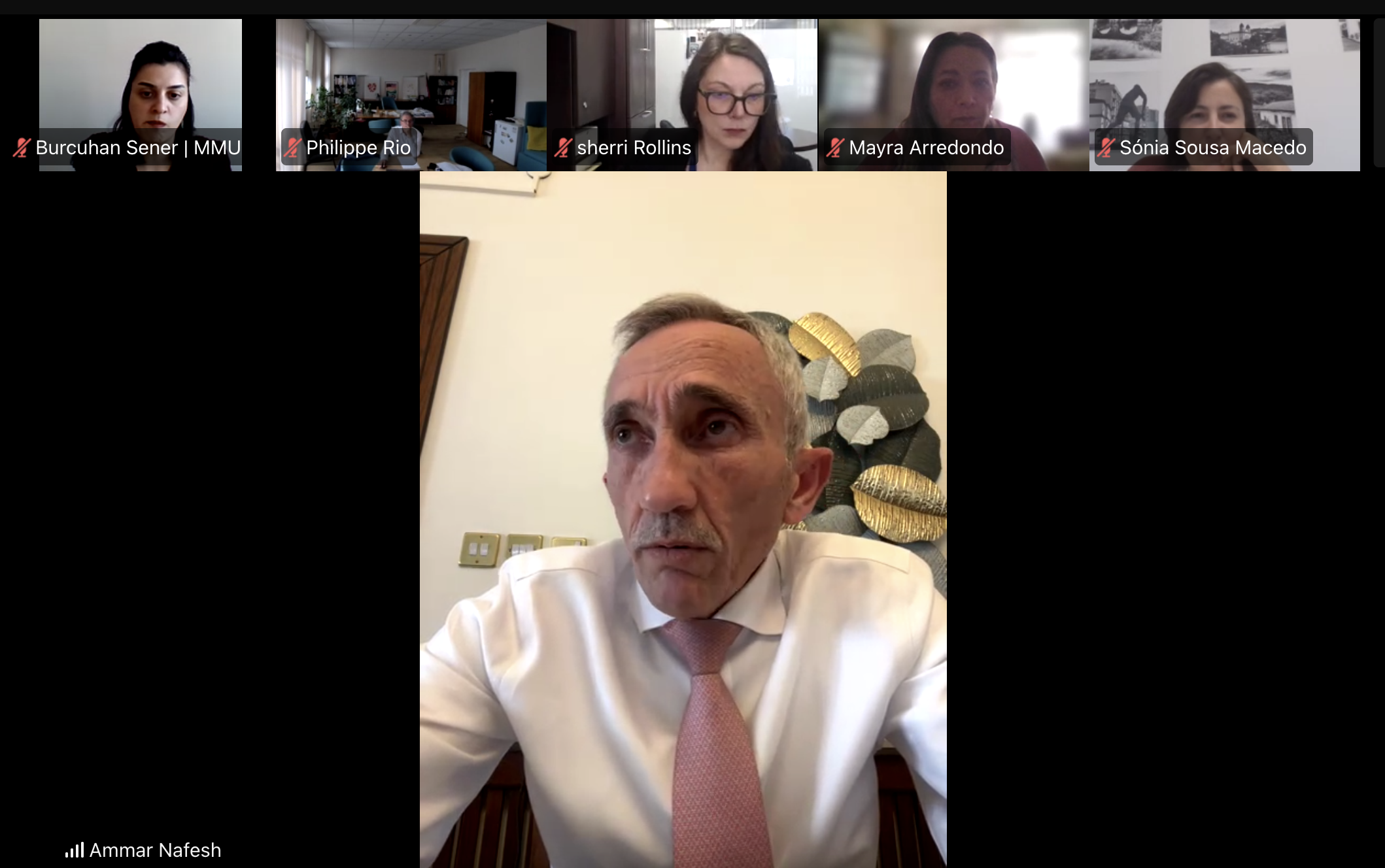
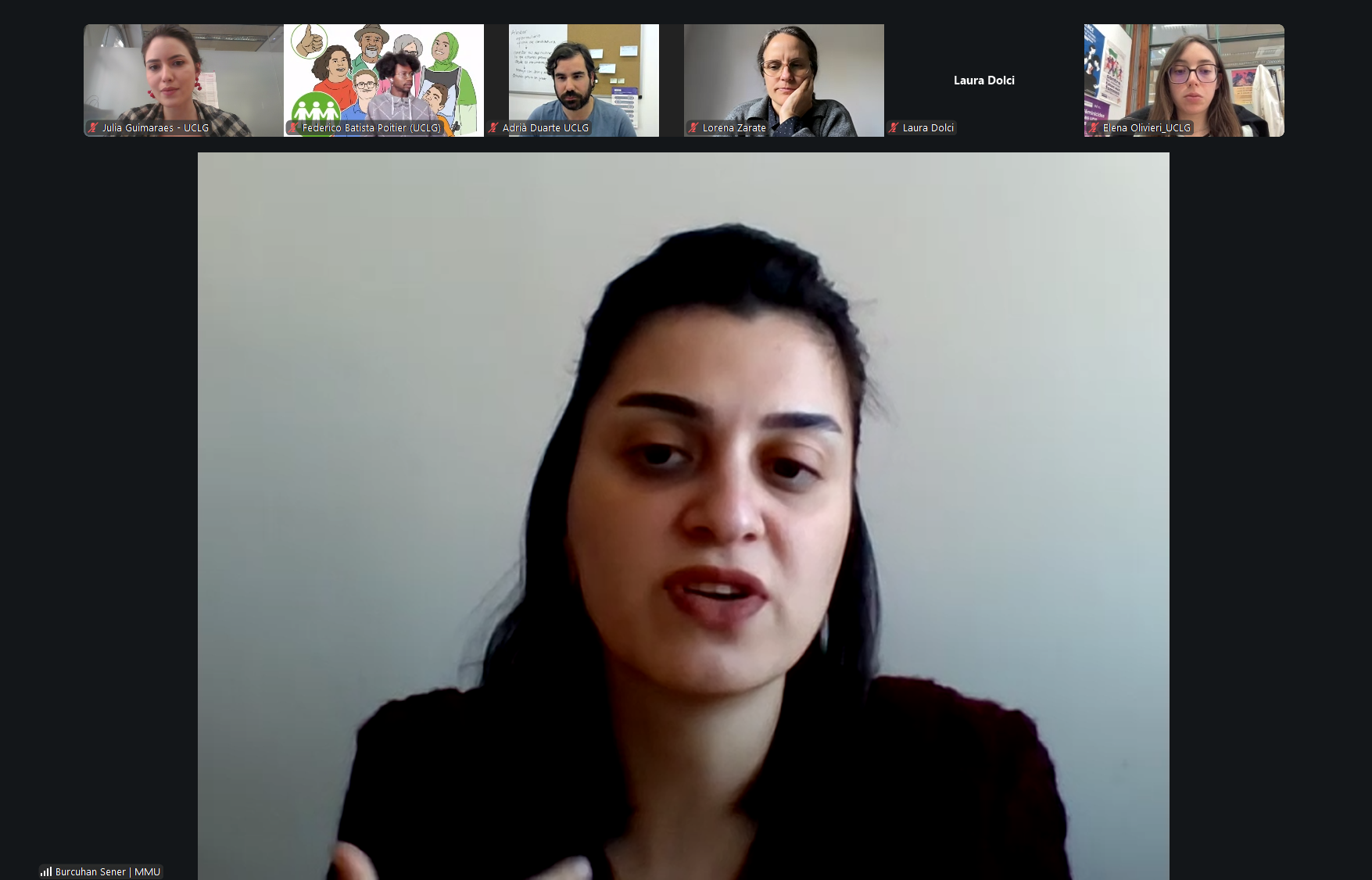
Together with Tétouan and the Manica Youth Assembly, this new wave of members reflects both the growing international momentum of the Human Rights Cities movement and the increasing diversity of local and regional governments committed to advancing human rights at the local level.
The meeting also showcased experiences from Gwangju, Mexico City and Seine-Saint-Denis, illustrating how cities and territories are translating human rights commitments into concrete policies, public services, and on-the-ground action.
Gyonggu Shin, Executive Director of the Gwangju International Center, recalled Gwangju’s long-standing role as a city of democracy, human rights and peace. Since adopting its human rights ordinance in 2007, the city has developed key institutional tools, including a Human Rights Office and the World Human Rights Cities Forum, launched in 2011 as a global space for exchange and cooperation.
From Mexico City, Rocío Lombera, General Coordinator of International Affairs, presented the city’s rights-based framework, including a Charter of Rights recognizing 49 rights for a democratic, feminist, safe and inclusive city. Her intervention highlighted priority actions on human security, housing, care, migration, participation and accessible urban transformation through the UTOPÍAS programme, linking them to the rights enshrined in the Charter-Agenda.
Maïra Topall, International Programmes Coordinator at the International Observatory on Violence Against Women (OIVF) showcased the Department of Seine-Saint-Denis’ work on gender equality and the fight against violence against women. Its initiative “Un toit pour elle” supports access to safe and long-term housing for women victims of violence, showing how rights become effective through concrete local policies and cooperation with municipalities.
Towards Gwangju, Tangier and beyond: Scaling Up the Human Rights Cities movement
Looking ahead, the Campaign will continue to build momentum towards the World Human Rights Cities Forum (WHRCF) in Gwangju and the UCLG Congress in Tangier, advancing human rights as a shared framework for local action, democratic renewal, and social justice.
From the adoption of the New Global Charter-Agenda for Human Rights in the City to the growing momentum of the fourth wave of the Global Campaign, a clear priority has emerged: to further strengthen the Human Rights Cities movement and support local and regional governments in building more democratic, inclusive, and rights-based societies.